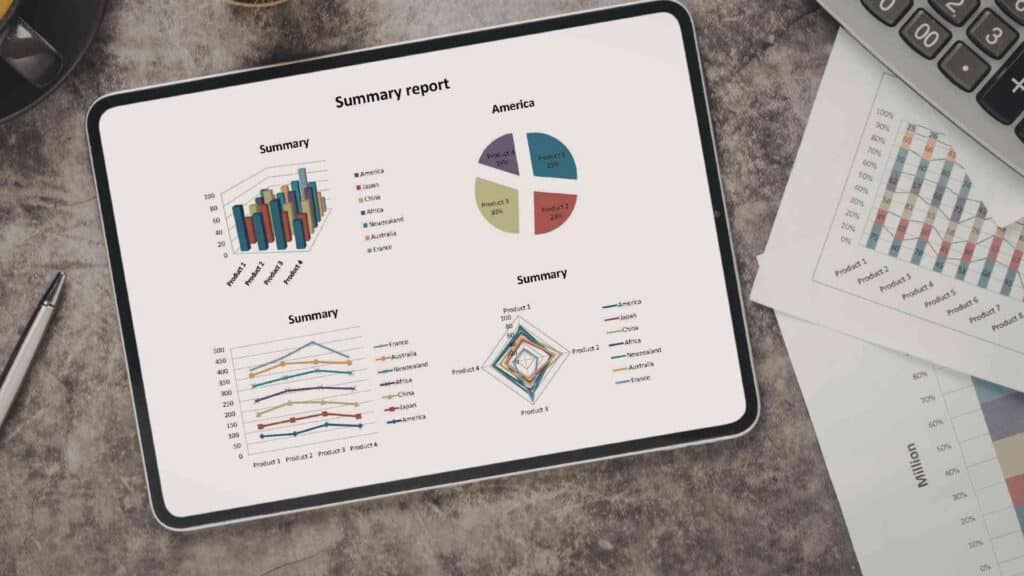

Highly data-driven organizations are three times more likely to report significant improvements in decision-making. Yet during the quarterly forecast call, many revenue leaders still lean on subjective opinions, incomplete CRM data, and reps’ gut feelings.
The problem is not a lack of data but the lack of the right data. Traditional forecasting misses the strongest leading indicator of deal health: the quality of the relationship between your sales team and the buying committee.
This guide explains how to move beyond lagging indicators, identify qualitative signals that predict outcomes, and apply AI to turn forecasting from a guessing exercise into a predictable science.
What Is Relationship Intelligence in Forecasting?
Relationship intelligence uses AI to analyze qualitative signals from interactions between sales reps and prospects. It turns unstructured data from emails, meetings, and call transcripts into objective metrics that measure deal health and momentum. The result is a clear view of which opportunities are real and which are at risk.
It evaluates communication frequency, the seniority of engaged stakeholders, and conversation sentiment to anticipate outcomes. For RevOps teams, this improves operational efficiencies and pipeline visibility.
Why Traditional Forecasting Methods Leave Revenue on the Table
Forecasts often depend on rollup calls where leaders question reps who may be overconfident about deals. This manual, sentiment-driven process is inefficient and inaccurate, which leads to missed targets and poor allocation of resources.
The core issue is translating raw data into actionable insight. While many businesses collect data, far fewer convert it into meaningful strategies. A CRM cannot reveal if a champion has gone quiet or if an opportunity is single-threaded in a key account.
When forecasts rely on opinions rather than evidence, everything from resource planning to setting quotas suffers. The revenue plan becomes vulnerable to surprises.
The Four Key Signals of Relationship Intelligence
Relationship intelligence becomes practical when broken into measurable signals. AI-powered platforms can track these automatically, score deal health based on real engagement, and give leaders a consistent way to evaluate every opportunity.
1. Engagement and Activity Analysis
Is the conversation a monologue or a dialogue? This signal tracks the flow of communication to measure real buyer interest. It looks past basic opens to analyze reply rates, meeting frequency, and time between interactions. Healthy deals show steady, two-way communication. Stalled deals often contain long gaps from the prospect.
2. Stakeholder and Buying Committee Mapping
Winning complex B2B deals requires a multi-threaded approach across the entire buying committee. It answers vital questions: Are decision-makers engaged, or are you stuck with influencers without budget authority? According to our 2025 Benchmarks Report, well‑qualified deals win 6.3x more often, which makes stakeholder identification essential.
3. Deal Momentum
How quickly is an opportunity moving through your process compared to historical wins? Momentum analysis benchmarks the current cycle against your own data to spot bottlenecks. If a deal sits in a stage for twice the average duration, it is a clear risk that needs targeted action and coaching.
4. Sentiment Analysis
The language within emails and call transcripts holds clues about trajectory. NLP-based sentiment analysis can distinguish positive buying signals, such as discussions of pricing and implementation, from vague or noncommittal language that signals low urgency or unclear intent.
How AI Turns Relationship Signals into Forecasting Accuracy
Capturing and analyzing relationship signals across hundreds of deals is not feasible manually. Unstructured data across emails, calendars, and call recordings requires AI to process at scale, surface patterns, and score deal health consistently.
AI models weigh each signal against historical outcomes to produce a predictive score that highlights which deals are on track and which require attention. Leaders can then prioritize coaching where it matters most instead of inspecting the entire pipeline. By leveraging real-time data, 80% of businesses have grown their revenue.
On an episode of The Go-to-Market Podcast, host Amy Cook spoke with Craig Daly about how AI is changing forecasting. Daly explained, “I mean, our forecasting is purely AI based on behaviors that someone’s manifesting on how they manage a pipeline or mismanage a pipeline. It’s… intelligently trying to tell me, you know, what signals would be indicative of a potential relationship that we’re gonna lose… what signals are indicative of relationships that we’re gonna win.”
Platforms like Fullcast Revenue Intelligence use an AI-first approach to deliver these insights, helping leaders see risk signals early so they can adjust plans with evidence.
A Practical Framework for Implementing Relationship Intelligence
Adopting relationship intelligence does not require replacing your sales process. It layers objective insights on top of your existing workflow so your team forms strong habits and gets early warnings on deals that need support.
Identify Your Signals
Define what a healthy relationship looks like for your cycle. What is the ideal cadence of meetings? Which stakeholders must be engaged before a proposal? Document benchmarks so AI can measure against a clear baseline.
Automate Data Capture
Manual entry reduces accuracy. Choose a platform that integrates with email, calendar, and CRM to capture a complete and unbiased view of activity. This ensures insights reflect reality, not partial logs. This level of automation allowed a company like Udemy to reduce planning time by 80%.
Analyze and Score
Once data is flowing, use AI to weigh the signals and produce a predictive health score for each deal. This gives leaders a simple, at-a-glance metric to prioritize coaching and focus on the opportunities that will move the quarter.
Coach and Iterate
Use insights to coach reps on specific gaps, such as missing executive engagement or a stalled stage. Over time, this strengthens Performance-to-Plan tracking and improves intervention timing, which raises forecast reliability.
Stop Guessing, Start Knowing
Relying on rep sentiment and lagging CRM data is a strategic risk. Relationship intelligence offers a clearer path by analyzing the real signals of buyer engagement so leaders can actively manage risk and momentum throughout the quarter.
True forecasting accuracy comes from a connected revenue engine where insights feed the entire go-to-market motion. The next step is to unify operations and close the operational gaps from planning to execution. This creates a single source of truth that equips your team with the data they need to perform.
This is more than a new methodology. It is a higher standard for performance. At Fullcast, we are so confident in this AI-first approach that we offer the industry’s only brand guarantee: We guarantee improved quota attainment in six months and forecast accuracy within ten% of your number.
Ready to build a predictable revenue engine? Learn how to Automate GTM operations and discover what a truly connected system can do for your team.
FAQ
1. Why are traditional sales forecasts often inaccurate?
Traditional forecasts are often unreliable because they depend heavily on subjective inputs, such as a sales representative’s intuition or “gut feeling” about a deal. Furthermore, it relies on CRM data that is often incomplete or outdated due to inconsistent manual entry. For example, a deal might be marked as “committed” even if there has been no recent communication with key decision-makers.
2. What is relationship intelligence in sales?
Relationship intelligence is an AI-powered technology that provides an objective, data-driven view of deal health. It automatically captures and analyzes thousands of qualitative signals from daily sales interactions like emails, calendar meetings, and video calls. These indicators include the frequency and recency of communication, the sentiment of conversations, and the level of engagement from key buyers. This gives sales leaders a real-time understanding of which deals are truly moving forward and which are at risk, based on actual relationship dynamics.
3. How does relationship intelligence improve forecasting accuracy?
Relationship intelligence dramatically improves forecasting accuracy by replacing subjective rep opinions with objective, verifiable data. For example, if a rep commits a deal but the data shows declining communication and no contact with the economic buyer, a leader can challenge that forecast. This data-driven methodology allows organizations to identify and mitigate deal risk earlier, leading to more reliable forecasts and better strategic decisions.
4. What are the four key signals relationship intelligence analyzes?
Relationship intelligence creates a holistic, objective view of pipeline health by analyzing four key types of signals. Together, these data points move forecasting from an art to a science, providing a clear picture of deal progression and risk. The four signals are:
- Engagement and Activity Analysis: Measures the quantity and quality of interactions, such as email response times and meeting frequency, to see if a deal has sufficient two-way communication.
- Stakeholder and Buying Committee Mapping: Identifies all contacts involved in a deal, maps their roles in the buying committee, and ensures key decision-makers are actively engaged.
- Deal Momentum Tracking: Monitors changes in engagement patterns over time to detect whether a deal is accelerating, stalling, or losing traction.
- Sentiment Analysis: Uses natural language processing to analyze the language in emails and calls to identify positive or negative sentiment, uncovering potential risks or opportunities.
5. Why is AI necessary for relationship intelligence to work at scale?
The sheer volume and complexity of sales interaction data make AI essential for relationship intelligence. A single sales team can generate tens of thousands of emails, calls, and meetings in a single quarter. It would be impossible for any human to manually review this unstructured data to identify subtle patterns across the entire pipeline. They can identify trends, score deal health based on thousands of signals, and surface predictive insights that would otherwise go unnoticed, allowing the entire sales organization to benefit from data-driven forecasting.
6. How do you implement relationship intelligence in a sales organization?
Implementing relationship intelligence is a straightforward process designed for rapid adoption with minimal disruption. It begins by securely connecting the platform to your company’s email and calendar systems to automate the capture of sales activity data. Once the data flows in, the AI engine begins analyzing it to generate objective deal scores and surface insights. Leaders can then use these data-driven dashboards for more effective pipeline reviews and to provide targeted coaching based on specific, observable behaviors rather than subjective assessments, leading to faster and more impactful performance improvements.
7. What makes AI-based forecasting more reliable than traditional methods?
AI-based forecasting is more reliable because it analyzes the underlying behaviors and relationship dynamics that truly indicate a deal’s likelihood to close, rather than relying on static, manually entered CRM fields. By analyzing thousands of data points across every deal, it transforms forecasting from an art based on opinion into a predictive science grounded in objective, real-time data.
8. Can relationship intelligence help with sales coaching?
Yes, relationship intelligence is a powerful tool for sales coaching because it provides objective data about rep activity and effectiveness. Instead of offering generic advice, managers can pinpoint specific areas for improvement with concrete evidence. For instance, a manager can move from saying “Be more proactive” to “I see you haven’t engaged with the economic buyer on this key account in over three weeks; let’s strategize an outreach plan.”
9. How does automated data capture improve forecast accuracy?
Automated data capture is the foundation of an accurate, AI-driven forecast. By syncing directly with email and calendar systems, it creates a complete and unbiased record of all sales activities, eliminating the errors and omissions common with manual CRM entry. It prevents the “garbage in, garbage out” problem, identifying true engagement signals that reps might otherwise miss or misreport.
10. What’s the ultimate goal of implementing relationship intelligence?
The ultimate goal is to transform your revenue process from a cycle of guesswork into a predictable, data-driven science. By building forecasts on objective relationship data rather than subjective opinions, you create a truly reliable revenue engine. Finance can plan more effectively, leadership can make strategic investments with greater certainty, and sales teams can focus their efforts on the deals most likely to close. An AI-first approach makes revenue planning dependable, helping businesses consistently meet their targets and scale growth efficiently.