









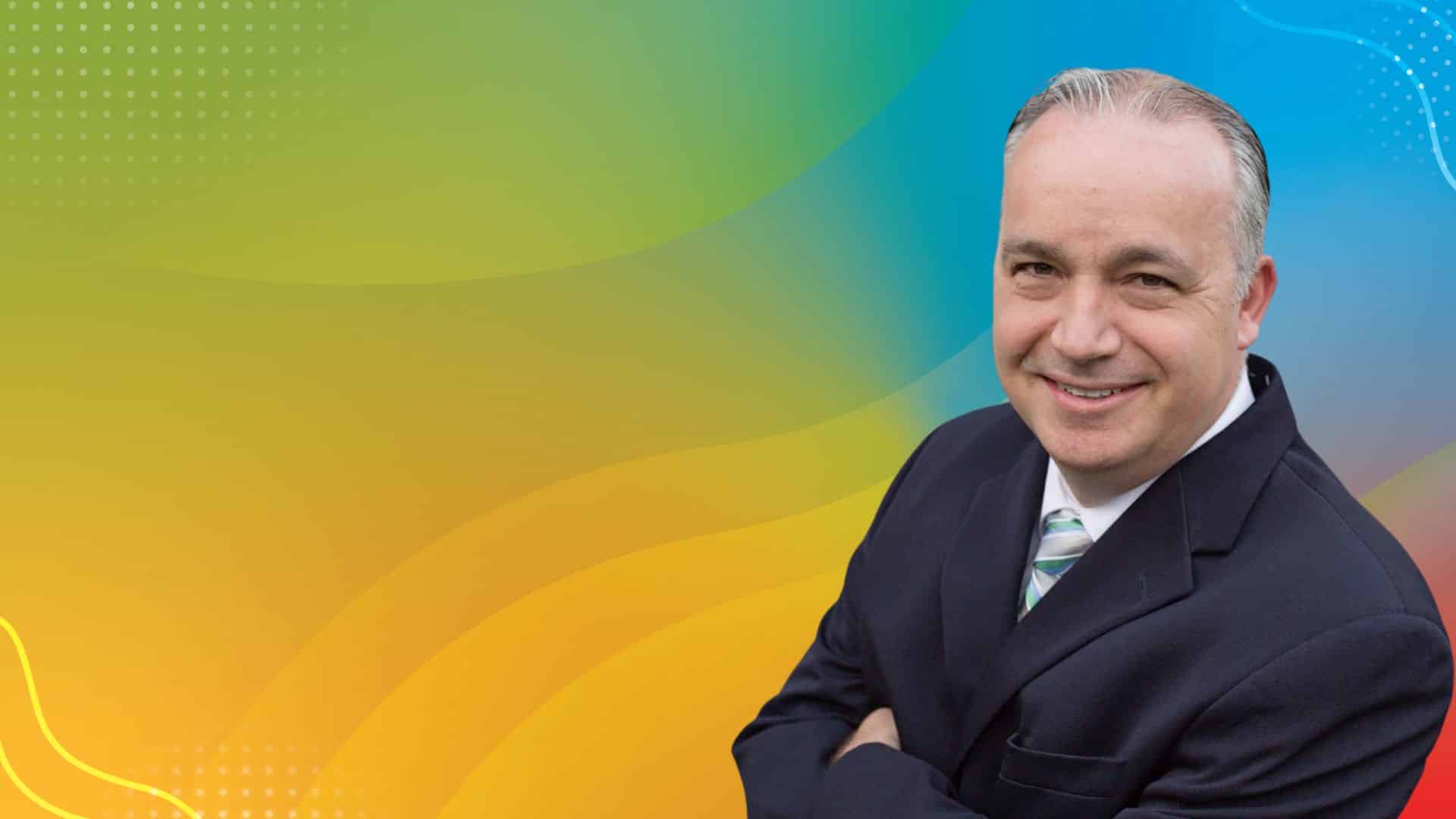
Amy Osmond Cook, Co-Founder and CMO at Fullcast, sits down with licensed psychologist Dr. David Morgan to discuss AI anxiety, resilience, and why mental health may become every executive’s biggest leadership challenge.
Amy: Let’s start with your background. Tell everyone a little about what you do.
David: I’ve been practicing as a licensed psychologist since 2002. I earned my Ph.D. in counseling psychology from Brigham Young University and have been in private practice ever since. Over my career, I’ve treated and evaluated more than 20,000 clients.
For many years I focused on forensic psychology, but over the last three or four years I’ve shifted my attention toward business consulting. What I’ve realized is that nearly every business owner is dealing with the mental health of their employees, whether they know it or not.
It’s affecting productivity. It’s affecting engagement. If we can help business leaders better understand mental health, they’ll build healthier organizations, treat people better, and better manage the risks that come with employee well-being.
Amy: One of the most poignant things I’ve experienced recently has been talking with employees who are worried AI is going to replace them. As an executive, I’ve found myself reassuring people that they’re unique, they’re valuable, and they can’t simply be replaced. Have you been seeing more of that?
“Anxiety thrives on the fear of the unknown.”
David: Absolutely. One thing we have to remember is that AI is developing so quickly that what we knew two months ago is different from what we know today. We need to be careful about making assumptions about what things will look like in one year, five years, or ten years because we simply don’t know. Anxiety thrives on the fear of the unknown.
As leaders, we should focus employees on what’s happening now and what we can realistically forecast over the next three to six months instead of making predictions that nobody can actually make.
I think five years from now we’ll discover AI is excellent at some things, decent at others, and surprisingly terrible at a few things we expected it to master. Right now there’s simply too much dust in the air to see clearly.
Amy: Do you think younger generations are struggling more with mental health, or are they simply more willing to talk about it?
Mike Woodruff, MD. : AI Can Transform Healthcare. But Only If We Get This Right
David: I’d love to have a crystal ball. Just because previous generations didn’t talk about mental health doesn’t mean it didn’t exist. But I do think mental health challenges are more pronounced today than they’ve ever been. Part of that is because we’re connecting less with other people. A friend recently told me the only friend he had was his AI companion.
That really struck me.
If your only friend is an AI companion, that’s not a real friendship. AI tells you what you want to hear. Real relationships don’t work that way.
Amy: That’s the difference between a real relationship and a fake one.
David: Exactly. Even if you tell AI to challenge you, you’re still controlling the relationship. Real relationships are unpredictable. Sometimes your spouse has had a bad day. Sometimes conversations don’t go the way you expected. That’s actually what builds resilience. Getting exactly what you expect doesn’t develop resilience. Learning how to deal with the unexpected does.
Lincoln Haycock: AI Won’t Save Healthcare Until This One Problem Is Fixed
Amy: How do we help employees become more resilient?
David: One of the biggest things we can teach is that we have to engage with our emotions instead of constantly escaping them. We’ve never had so many ways to avoid uncomfortable feelings. You can scroll social media. You can binge content. You can distract yourself endlessly.
“Getting exactly what you expect does not develop resilience.”
Years ago, if you were sad, you simply had to be sad. Today we can avoid sadness almost indefinitely. The more we avoid difficult emotions, the less resilient we become. It’s okay to feel anxious. It’s okay to feel sad. As we experience those emotions instead of immediately pushing them away, we learn how to manage them better.
Amy: Do AI therapists have a place in the future?
David: Maybe they become useful as a supplement. But I don’t believe they’ll replace therapy.
Researchers conducted a huge meta-analysis trying to determine what predicts successful therapy outcomes. After looking at hundreds of variables, one factor consistently predicted success.
If clients had a good relationship with their therapist, they improved. If they had a poor relationship, they usually stayed the same or got worse. It all came down to the relationship.
I don’t believe you can truly replace that human connection with a computer.
Amy: I couldn’t agree more.
One of the things I believe most strongly is that AI will never replace genuine human relationships because emotion is part of what makes us human. So let’s bring this back to leadership.
Dr. Jeremy Weisz: He Knew The Voice Message Was Fake in 3 Seconds. Here’s How.
What’s your biggest piece of advice for executives who want to build resilient organizations?
David: We need to stop treating workplace mental health as a wellness initiative. We need to start treating it as a risk management issue. Leaders should look carefully at their policies, their resources, and the way they support employees.
“We need to stop treating workplace mental health as a wellness issue and start treating it as a risk management issue.”
Mental health shouldn’t be something companies acknowledge only during Mental Health Awareness Month. It should become part of how organizations manage risk—just like cybersecurity. When leaders intentionally build resilient employees, they also build stronger organizations.