





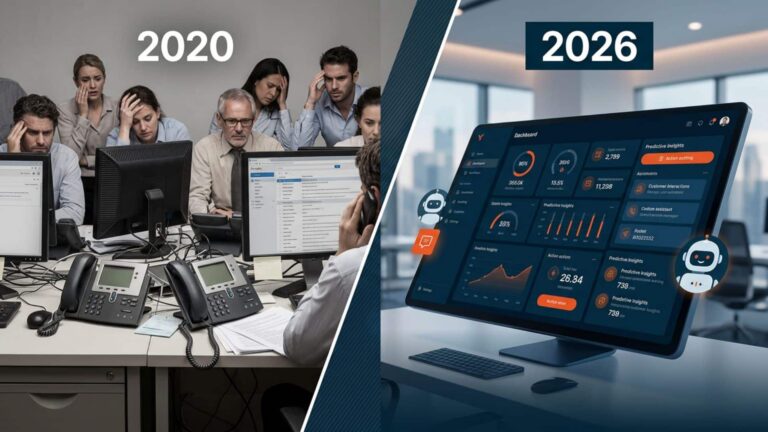





1. Great GTM strategies fail when operating models rely on disconnected systems. The article makes a critical distinction between strategy and execution. A company can have a strong ICP, compelling positioning, and ambitious growth targets, but still miss revenue goals when territories, quotas, routing, forecasting, and compensation operate independently. The operating model—not the strategy—is often the point of failure.
2. High-performing GTM organizations build systems, not heroics. Many organizations depend on spreadsheets, manual workarounds, and a handful of talented employees who know how to keep everything running. Successful GTM teams build repeatable systems that scale. Integration, automation, and consistent operational rules create reliability that individual effort alone cannot sustain.
3. Leading indicators matter more than lagging metrics. Revenue, bookings, and attainment tell leaders what already happened. High-performing organizations focus on pipeline coverage, territory balance, forecast accuracy, conversion velocity, and quota health scores because those metrics reveal problems before they impact revenue.
4. Cross-functional ownership drives revenue velocity. The fastest-growing organizations stop treating Marketing, Sales, Customer Success, and RevOps as separate functions. They create shared accountability, shared metrics, and shared visibility. Revenue growth accelerates when handoffs disappear and teams operate as a connected system.
Your revenue leader has a brilliant GTM strategy on paper. Clear ICP, strong value proposition, ambitious targets. Six months later, territories are misaligned, forecasts miss by 20%, and sales reps are frustrated by quotas that feel arbitrary. The strategy was sound. The operating model broke down.
This scenario happens more often than most leaders want to admit. 70% of GTM strategies fail due to a lack of alignment across teams. The main culprit for this failure is that the operational systems meant to execute that vision were built on spreadsheets, disconnected tools, and manual handoffs.
I’ve talked with executives who believed they had a lead-generation problem. After digging deeper, they discovered they had an operating model problem. Opportunities were getting lost in the handoffs.
The gap between GTM strategy and a GTM operating model is where revenue stalls. Strategy defines what you plan to do. Your operating model determines how you actually execute. Most operating models rely on manual workarounds and individual heroics rather than intelligent, connected systems.
This article reveals seven operational principles that separate high-performing GTM operating models from the ones that stall out. They are specific, measurable systems and practices that drive results, including how AI-native infrastructure helps companies generate 156% more qualified pipeline.
The Seven Operational Principles That Define Successful GTM Operating Models
What makes these different from the strategic advice you have read a hundred times before? These are not vision statements or cultural aspirations. They are operational principles that govern how GTM systems function day-to-day, week-to-week, and quarter-to-quarter.
The best GTM operating models demonstrate these seven characteristics:
- End-to-End Integration: Planning, execution, and compensation operate as one connected system
- AI-Native Infrastructure: Intelligence embedded in operations, not bolted on afterward
- Continuous Planning Cycles: Agility built into the operating model, not reactive firefighting
- Single Source of Truth: One data foundation that eliminates version control chaos
- Automated Policy Enforcement: Rules-based decision-making that scales without friction
- Leading Indicator Obsession: Predictive metrics that enable proactive adjustments
- Cross-Functional Ownership: Shared accountability across revenue functions, not departmental silos
Each principle reinforces the others. Together, they form an operating system that turns GTM strategy into predictable revenue outcomes.
Principle #1: End-to-End Integration, from Plan to Pay in One System
The best GTM operating models connect planning, execution, and compensation into one integrated system where changes in one area cascade automatically through the rest.
Most companies work differently. Territory planning lives in spreadsheets. CRM handles pipeline. Forecasting runs through yet another tool. Commissions get calculated in a separate platform entirely.
Plan-to-Pay Data Quality: Why Revenue Teams Can’t Afford Bad Data
Each handoff between systems creates data inconsistency and delays. 90% of businesses struggle to execute their strategies, in large part because fragmented infrastructure makes alignment nearly impossible.
When territory changes, routing rules update automatically. When deals close, commissions calculate in real time. When forecasts shift, capacity plans adjust without a single spreadsheet being opened. With Fullcast Plan, teams can conduct complex territory planning using revenue potential, account count, and workload balance metrics in as little as 30 minutes, because planning, execution, and compensation all live in the same connected system.
Degreed consolidated four separate routing tools into Fullcast’s unified platform, saving five hours per week on territory modeling and deploying their entire GTM plan for more than 50 reps in just six weeks. Their RevOps team went from spending days on territory changes to completing them in a single afternoon.
Integration alone is not enough. The best operating models are built with intelligence at their core because AI can identify patterns humans miss and automate decisions that previously required manual review.
Principle #2: AI-Native Infrastructure, Intelligence Embedded, Not Bolted on
93% of GTM teams already use AI in some form. But “using AI tools” and “operating on AI-native infrastructure” are fundamentally different things.
Most platforms added AI features to existing legacy systems. A chatbot here, a predictive score there. An AI-native GTM system is designed differently from the ground up. Intelligence informs every process: territory design, quota setting, forecast accuracy, and deal scoring.
Think of it like navigation. Bolted-on AI is like having a GPS app on your phone while driving a car designed in 1995. AI-native infrastructure is like a self-driving car where navigation, sensors, and vehicle controls work as one system.
AI-driven GTM strategies generate 156% more qualified pipeline, reduce customer acquisition cost by 42%, and boost sales productivity by 35%. For the RevOps leader managing territory changes, this means the system recommends optimal account assignments based on rep capacity, historical performance, and account potential rather than requiring manual analysis of spreadsheets.
Unlike other planning platforms, Fullcast was built with AI as its foundation. Teams gain intelligent insights that drive revenue efficiency. For organizations ready to make this shift, the path forward starts when you embed AI as the operational backbone rather than treating it as a feature checkbox.
AI-native infrastructure enables continuous planning because the system can analyze performance data and recommend adjustments faster than any manual process.
Principle #3: Continuous Planning Cycles, Agility Without Chaos
Traditional models lock in territories, quotas, and capacity once a year, then spend the next 12 months firefighting when reality diverges from the plan. The best GTM operating models reject this approach entirely.
Continuous GTM planning builds regular review cycles (30, 60, and 90 days) into the operating rhythm. Territories rebalance based on actual performance. Quotas adjust for market conditions. Capacity plans flex with hiring realities. This is proactive and systematic, not reactive chaos.
The difference shows up in how teams spend their time. As Ryan Westwood noted in the 2026 Benchmarks Report: “The 2026 benchmark highlights a systems problem, not an effort problem. Revenue engines are fragmented, with planning disconnected from execution… Velocity compounds when alignment is engineered from the start.”
Fullcast’s platform enables continuous planning without spreadsheet chaos. Territory changes propagate automatically, quota adjustments flow through to forecasts, and capacity plans update in real time.
Continuous planning only works when everyone operates from the same data foundation, which is why the next principle matters.
Principle #4: Single Source of Truth, One Data Foundation, Zero Version Control
When territory data lives in one spreadsheet, account assignments in another, and quota tracking in a third, version control becomes impossible. Nobody knows which version is “real.” Debates about whose numbers are correct replace conversations about how to grow revenue.
A single source of truth works like a shared bank account statement: everyone sees the same balance, and transactions update in real time. One system connects to your CRM where territory definitions, account hierarchies, quota allocations, and performance tracking all live. Sales leaders, ops teams, and finance all see the same data in real time.
Own replaced its manual, non-scalable territory process with Fullcast’s dynamic platform, creating one system for territory segmentation, lead routing, and account hierarchies. The result: a single, adaptive planning system that eliminated version control chaos across their entire GTM team.
A single source of truth enables automated policy enforcement because consistent data allows consistent rules.
Principle #5: Automated Policy Enforcement, Rules-Based Decisions That Scale
When every lead routing decision, territory exception, or quota adjustment requires manual intervention, ops teams become bottlenecks and inconsistency creeps in. The best GTM operating models encode business rules into automated policies that enforce consistency at scale.
What does this look like? If account size exceeds a threshold, route to the enterprise team. If a territory exceeds capacity, trigger rebalancing. If quota attainment drops below a target percentage, flag for coaching.
These are not “set it and forget it” automations. They are consistent enforcement of agreed-upon rules with human oversight for exceptions.
Automated policies free ops teams to focus on leading indicators.
Principle #6: Leading Indicator Obsession, Predictive Metrics over Lagging Scorecards
Most companies track revenue, bookings, and attainment. All lagging indicators. They tell you what already happened but do nothing to help you course-correct before it is too late.
High-performing GTM operating models obsess over leading indicators: pipeline coverage by stage (is each rep at 3x their quota?), conversion velocity (how quickly do deals move from stage to stage?), territory balance metrics (are accounts distributed fairly?), quota health scores (are quotas achievable based on territory potential?), and forecast accuracy trends.
Instead of reactive conversations (“You missed your number, what happened?”), leaders can have proactive ones (“Your pipeline coverage is trending down, let’s adjust your prospecting strategy this week”). SaaS companies with strong GTM strategies grow 20% to 30% faster than their peers, and a significant part of that advantage comes from seeing problems before they become crises.
Fullcast’s performance analytics layer powers proactive coaching and insight, helping leaders understand what drives revenue outcomes through territory balance scores, quota health metrics, and forecast accuracy trends.
Leading indicators only matter if the right people see them and act on them together, which brings us to the seventh principle.
Principle #7: Cross-Functional Ownership, Shared Accountability across Revenue Functions
Traditional models assign territories to sales, lead gen to marketing, renewals to customer success, and planning to ops. Each department has different goals, different tools, and different definitions of success. Every handoff between departments slows down revenue.
After hosting hundreds of Go-To-Market Podcast interviews, I’ve noticed that the highest-performing companies talk surprisingly little about tactics. Instead, they talk about alignment, systems, and execution discipline.
As Roee Hartuv discussed on The Go-to-Market Podcast, the traditional departmental structure creates inherent friction that undermines even the best GTM strategies:
“There’s a fundamental problem with go-to-market that still from the SaaS times… companies are built on different departments, right? We’ve got the marketing team… the sales team… an onboarding team, and then a customer success team. Each different department has a different role and different responsibilities, but that handover creates friction… I believe that we should adapt principles from system thinking. […] If each system has a defined input and an output, this allows us to eliminate some of the friction… and create one coherent go-to-market approach between the different departments.”
When teams think in terms of end-to-end systems rather than departmental responsibilities, velocity increases. In practice, this means shared revenue targets across functions, collaborative planning processes where marketing and sales build territory plans together, unified definitions of what counts as a qualified lead, and joint accountability for outcomes.
Making cross-functional ownership work requires designing smarter GTM systems that connect data, teams, and automation into a single operating model. Fullcast’s unified platform eliminates departmental handoffs by giving marketing, sales, CS, and ops teams one shared platform where planning, execution, and performance tracking happen together.
These seven principles work together as an integrated operating system.
How These Principles Work Together: The Operating System Effect
The seven principles are not a checklist you can pick from selectively. They form an interconnected operating system where each principle reinforces the others, and the combined effect is what separates high-performing GTM models from the rest.
End-to-end integration enables a single source of truth. A single source of truth enables automated policies. Automated policies enable continuous planning. Continuous planning enables leading indicator tracking. Leading indicators enable cross-functional ownership. And AI-native infrastructure makes all of it smarter over time.
Companies that adopt one or two principles without the full operating system still experience friction and failure. “We use AI tools” is not the same as operating on AI-native infrastructure. “We do quarterly reviews” is not the same as continuous planning. Partial implementation creates the illusion of progress while the underlying operating model remains fragmented.
Many GTM transformations stall for this reason. The GTM transformation framework that drives lasting adoption requires a “planned agile” approach, one that treats these principles as interconnected systems rather than independent initiatives.
Building this operating system requires a platform designed for integration, not a patchwork of point solutions. Fullcast is the industry’s first end-to-end Revenue Command Center, the only platform built to put all seven principles into practice in one integrated system.
Building Your High-Performance GTM Operating Model: Where to Start
Understanding these principles is one thing. Implementing them requires a practical roadmap.
Audit Your Operating Model Against the Seven Principles
Conduct an honest audit of your operating model. Where do handoffs break down? Where do manual processes create bottlenecks? Map your tool stack and count how many disconnected systems you use for planning, execution, and compensation. The GTM ops framework provides a structured approach for understanding where you are now and identifying the gaps that matter most.
Start with Single Source of Truth and End-to-End Integration
Not all principles need to be implemented simultaneously. Start with the ones that address your biggest pain points. For most companies, “single source of truth” and “end-to-end integration” deliver the fastest wins because they eliminate the spreadsheet chaos and tool fragmentation that create daily friction. Build momentum with early results before tackling cultural changes like cross-functional ownership.
Evaluate Whether Your Current Tools Support an Integrated Operating Model
Ask these questions: Can territory changes automatically update routing rules? Can quota adjustments flow through to forecasts without manual intervention? Does everyone see the same data in real time? Most tools cannot support this because they were designed as point solutions. Look for AI-native architecture rather than AI features bolted onto legacy systems.
Establish Quarterly Review Cycles
Building a high-performance operating model is not a one-time project. Establish quarterly review cycles to assess what is working and what needs adjustment. Measure progress against leading indicators, not just implementation milestones. The operating model should evolve as your business grows and market conditions shift.
Fullcast customers see improvements in quota attainment within six months and forecast accuracy within ten percent of their target number. Our platform puts into practice the seven principles that make GTM operating models succeed.
From Operating Model to Competitive Advantage
The seven operational principles separate high-performing GTM models from the 70% that fail. Companies using AI-native, integrated operating models generate 156% more qualified pipeline and see 30% revenue increases compared to those using fragmented systems.
CEOs Are Rethinking GTM Planning (And Building This Instead)
Every month spent on fragmented systems means pipeline that could have been captured, forecast accuracy that could have been improved, and reps who could have trusted their quotas.
You have two paths forward. You can try to patch together point solutions that were never designed to work as one system. Or you can implement a unified Revenue Command Center built to put all seven principles into practice from day one. The second path requires investment and organizational change, but the data shows it delivers measurable results.
Fullcast is the industry’s first end-to-end Revenue Command Center, managing the entire revenue lifecycle from territory design through forecasting, commissions, and performance analytics in one connected system.
Ready to see how an integrated GTM operating model works in practice? Schedule a demo to see Fullcast in action.