







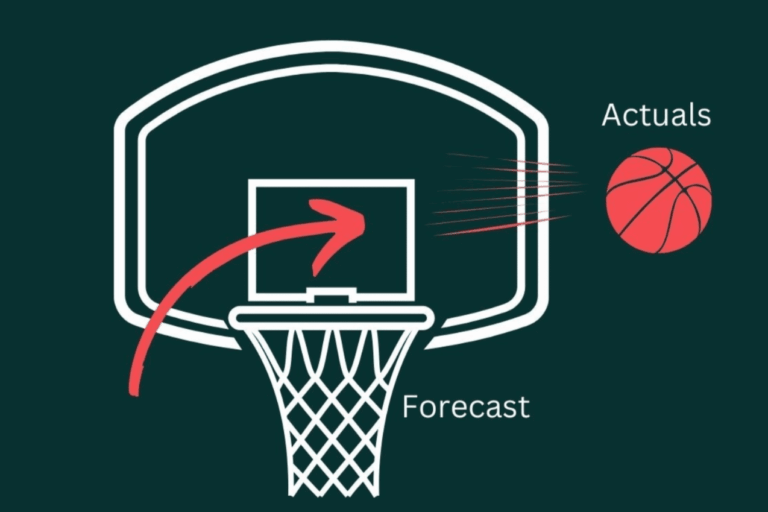



Most B2B companies treat workforce planning like a headcount exercise. They ask, “Do we have enough people?” That question misses the point entirely. The real question is whether you have the right people, with the right skills, in the right territories, with the right quotas, at the right time.
When you consider that B2B deals average 62+ touchpoints over six or more months, the stakes of getting workforce planning wrong demand attention. Misallocated reps, unbalanced territories, and disconnected planning systems don’t just create operational headaches. They erode revenue.
Here’s the core problem: traditional workforce planning tools were built for HR departments managing shift schedules and call center staffing. Revenue teams face a fundamentally different challenge. They need to align talent, territories, coverage models, and quotas in a way that directly drives revenue outcomes. When workforce planning is disconnected from go-to-market (GTM) strategy, quota attainment suffers, forecasts miss, and planning cycles drag on for months.
This guide changes that conversation. Inside, you’ll learn:
- What B2B workforce planning tools do and how they differ from generic workforce management software
- Why revenue teams need a specialized approach
- The five critical capabilities that separate basic capacity planning from strategic revenue workforce planning
- How to evaluate tools based on revenue impact rather than feature checklists
What Is a B2B Workforce Planning Tool?
A B2B workforce planning tool is a software platform that helps revenue organizations forecast staffing needs, design territories, allocate resources, and set quotas based on strategic revenue goals. Generic workforce management software handles shift scheduling and time tracking. B2B workforce planning tools handle the specific challenges of sales and go-to-market teams: territory carving, quota setting, and coverage modeling.
This distinction directly impacts revenue outcomes. Traditional workforce management focuses on operational efficiency, scheduling the right number of people for predictable workloads. B2B workforce planning focuses on maximizing revenue per rep, ensuring you have the right mix of talent, coverage, and capacity to hit revenue targets in unpredictable, complex selling environments.
Here’s how these capabilities translate into daily operations:
Strategic Capacity Planning
Modern B2B workforce planning tools forecast future headcount needs based on revenue targets, not just historical workload. They model different scenarios: “What if we expand into Europe, the Middle East, and Africa (EMEA)?” or “What if average selling price (ASP) drops 15%?”
They answer the question every Chief Revenue Officer (CRO) needs answered: “How many reps do I need to hire to hit $50M in annual recurring revenue (ARR)?”
Strategic capacity planning connects hiring decisions to revenue targets rather than treating headcount as an isolated budget line item.
Territory Design and Optimization
These tools balance territories based on multiple variables simultaneously, including revenue potential, account density, product complexity, and rep experience. They continuously adjust territories as market conditions change and ensure equitable quota distribution across the sales org.
Effective territory design ensures every rep has a fair opportunity to hit quota while maximizing total market coverage.
Quota and Coverage Alignment
The best platforms connect capacity planning to quota setting so targets are achievable. They map coverage models to specific market segments. A one-to-one model pairs a single rep with a set of accounts. A one-to-many model has one rep covering multiple segments. An overlay model adds specialists on top of core account coverage. This prevents the disconnect between “how many reps we have” and “what we’re asking them to achieve.”
When capacity planning and quota setting happen in the same system, quotas reflect what’s mathematically possible given territory potential.
GTM Execution Speed
Speed separates strategic tools from basic calculators. Specialized platforms reduce planning cycles from months to weeks or days, enable in-year adjustments without rebuilding entire plans, and push territory and role assignments directly to CRM instantly.
B2B workforce planning tools aren’t about tracking time or scheduling shifts. They’re about architecting how revenue talent creates value and doing it fast enough to keep pace with market changes.
Why Revenue Teams Need Different Workforce Planning Than HR Teams
Walk into any HR department and ask about workforce planning. They’ll show you tools built for predictable, repeatable work: scheduling nurses for hospital shifts, staffing call center agents based on call volume patterns, or managing retail employees across store locations.
These tools are built on a fundamentally different model than what revenue teams need. The workforce management software market is worth $9.76 billion in 2026, growing to $12.04 billion by 2031. The vast majority of that market serves use cases that have nothing to do with revenue operations.
The HR Workforce Planning Model
HR workforce planning operates on predictable demand. Call volume follows patterns. Store traffic is seasonal. Roles are largely standardized, meaning one customer service rep is interchangeable with another.
The focus is efficiency: minimize labor costs while meeting service levels. Planning is static, built around annual headcount budgets with minor quarterly adjustments.
HR workforce planning optimizes for cost efficiency in predictable environments. Revenue workforce planning optimizes for revenue outcomes in unpredictable markets.
The Revenue Workforce Planning Model
Revenue workforce planning requires fundamentally different capabilities. Market conditions shift and competitive landscapes change mid-quarter. Roles are highly specialized. A rep who sells to enterprise healthcare is not interchangeable with one who sells to SMB vs. enterprise fintech.
The focus is effectiveness: maximize revenue per rep, not minimize cost per hour. Planning must be continuous because territories, quotas, and coverage models need to adapt in real time.
Revenue teams need planning tools that treat workforce decisions as revenue decisions, not cost management exercises.
The Real-World Impact
Two quick scenarios show why this matters.
The Misallocated Expert: A SaaS company assigns their most experienced enterprise rep to a territory with mostly SMB accounts because “that’s where the headcount gap was.” The rep is bored, the SMB deals don’t need that level of expertise, and the enterprise territory suffers. An HR workforce planning tool would see “territory filled.” A revenue workforce planning tool would see “margin erosion.”
The Planning Time Trap: A B2B company spends four months on annual territory planning using spreadsheets and generic capacity tools. By the time the plan is finalized, two major competitors have launched, three key reps have left, and the market has shifted. The plan is obsolete before it’s executed.
What revenue teams need:
- Tools that connect workforce decisions to revenue outcomes like quota attainment, forecast accuracy, and win rates
- The ability to model complex scenarios
- Integration with CRM and sales planning systems rather than just Human Resource Information Systems (HRIS) and payroll
- Speed measured in days rather than months
The gap between HR workforce tools and revenue workforce needs explains why so many sales organizations still rely on spreadsheets despite the risks.
The 5 Critical Capabilities of Modern B2B Workforce Planning Tools
The difference between basic capacity calculators and platforms that drive revenue outcomes comes down to five capabilities.
1. Multi-Variable Territory Balancing
Territory design requires balancing dozens of variables simultaneously: revenue potential, account density, product complexity, competitive intensity, and rep experience level.
Traditional tools ask: “How many reps do we need?” Modern tools ask: “What’s the optimal way to carve up our market so every rep has an equitable shot at hitting quota?”
Strong multi-variable territory balancing looks like this: balance territories in 30 minutes instead of three months, model multiple scenarios side by side, automatically flag imbalances, and adjust territories mid-year without rebuilding the entire plan.
Zones eliminated a three-month GTM delivery delay through automated territory balancing with Fullcast. As their team noted: “Fullcast is a wonderful capacity management tool that has the ability to develop into something that’s more automated and can actually help you have fewer resources aligned as you grow and scale.”
Multi-variable territory balancing ensures equitable distribution of opportunity, not just equitable distribution of accounts.
2. Integrated Capacity and Quota Planning
The number one reason quotas feel “unfair” is that capacity planning and quota setting happen in silos.
Integrated tools automatically calculate quota based on territory and capacity potential, model ramp time for new hires, adjust quotas when territories change mid-year, and guarantee that aggregate quotas align with company revenue targets.
Fullcast guarantees improved quota attainment in six months and forecast accuracy within 10% of your number because capacity, territories, and quotas are planned together, not separately.
Integrated planning eliminates the disconnect between what you’re asking reps to achieve and what’s mathematically achievable in their territories.
3. Scenario Modeling and Continuous Planning
Markets change. Competitors launch. Reps leave. Products evolve. If your workforce plan is static, it’s wrong.
Modern tools model scenarios in minutes: “What if we double down on enterprise and pull back from SMB?” They compare scenarios side by side with clear impact on quota attainment and capacity utilization. They make in-year adjustments without starting from scratch and maintain a single source of truth that updates in real time.
Udemy achieved an 80% reduction in planning time and shifted from one annual plan to unlimited in-year territory adjustments with Fullcast. Their team put it simply: “If you know the risks involved in annual planning and you fully understand what Fullcast provides, it’s the easiest purchase you’ll ever make.”
Scenario modeling transforms planning from a quarterly exercise into a continuous capability that keeps pace with market changes.
4. CRM Integration and Automated Execution
A plan that lives in a spreadsheet or standalone tool is just a plan. A plan that automatically updates your CRM is execution.
The best tools offer instant territory deployment to Salesforce, automatic role hierarchy updates, quota data flowing directly into CRM dashboards, and changes that reflect immediately. Fullcast’s Coverage and Capacity capabilities enable instant execution in Salesforce, eliminating the gap between planning and deployment.
Most workforce planning tools stop at “here’s your plan.” Fullcast goes further: “here’s your plan, and it’s already live in Salesforce.”
5. Performance Analytics and Closed-Loop Feedback
You can’t optimize what you don’t measure. The best workforce planning tools don’t just help you plan. They help you learn.
This means tracking quota attainment by territory, role, and coverage model. It means identifying which territory designs drive the highest win rates, understanding which capacity models work best for different segments, and using historical performance to inform future plans.
With 64% of B2B companies expecting to increase their investments in predictive analytics, this capability is now essential for competitive revenue organizations.
Closed-loop feedback turns every planning cycle into a learning opportunity that improves the next cycle.
How to Evaluate B2B Workforce Planning Tools: Beyond the Feature Checklist
Features don’t matter if they don’t drive the outcomes you need. Here’s how to evaluate tools based on what matters: revenue impact.
Start with Outcomes, Not Features
The wrong question: “Does this tool have AI-powered forecasting?”
The right question: “Will this tool help me improve quota attainment and forecast accuracy, and by how much?”
When evaluating vendors, ask three questions. Can you guarantee measurable improvements in quota attainment? Fullcast guarantees improvement in six months. How long does it take to go from plan to execution in CRM? With Fullcast, it happens instantly. How much time will this save our planning cycles? Fullcast customers report 50-80% reductions.
Evaluate vendors on guaranteed outcomes, not feature lists. If they can’t quantify the improvement, they’re selling hope.
Evaluate Integration, Not Isolation
If your workforce planning tool doesn’t connect to your territory design, quota setting, and CRM, you’re just adding another silo.
Look for native CRM integration rather than CSV exports, unified planning across capacity, territories, and quotas, and a unified data source for all GTM planning data. Fullcast Plan unifies territory, quota, and capacity planning in a single system with instant deployment to Salesforce.
Integration determines whether your planning tool creates value or creates another data silo to manage.
Prioritize Speed and Agility
In a recent episode of The Go-to-Market Podcast, host Amy Cook and guest Peter Ikladious discussed the limitations of generic workforce management tools. As Ikladious explained: “We’re working with a B2B SaaS company that does workforce management, so workforce management, scheduling and what we found was unless you’ve plugged in your entire employee base and payroll, it’s absolutely like there’s no value. Someone see, it’s like, okay, that’s all I’m seeing is some generic screens.”
This highlights why B2B revenue teams need specialized solutions that deliver value from day one, not after months of data integration. Ask how long initial implementation takes, whether you can make mid-year adjustments without rebuilding the entire plan, and how quickly you can model and compare scenarios.
Speed to value matters more than feature depth. A tool that takes six months to implement delivers zero value for six months.
Demand Proof, Not Promises
Look for customer case studies with specific metrics, not vague “improved efficiency” claims. Look for guarantees. Fullcast guarantees quota attainment improvement. And ask for references from companies similar to yours.
Red flags include vendors who can’t show measurable customer outcomes, tools that require 6-12 months of implementation before you see value, and platforms that promise “AI” but can’t explain what it does.
The Fullcast Approach: Workforce Planning as Part of the Revenue Command Center
Most workforce planning tools treat planning as a standalone function. Fullcast treats it as one component of an integrated revenue operations system.
The Four Pillars: Plan, Perform, Pay, and Performance
- Plan (Workforce, Territory, and Quota Planning): Design territories based on market potential and rep capacity. Set quotas that are mathematically achievable. Model scenarios to optimize resource allocation.
- Perform (Deal Intelligence and Forecasting): Track how workforce decisions impact pipeline and win rates. Forecast with 10% accuracy because your capacity model is sound.
- Pay (Commissions and Incentives): Ensure reps are paid accurately based on territory assignments and quota attainment. Build trust through transparent, automated commission calculations.
- Performance (Analytics and Coaching): Understand which workforce models drive the best outcomes. Use data to continuously improve future GTM planning.
Why Integration Matters
When workforce planning is disconnected from forecasting, commissions, and performance analytics, you lack visibility into what’s working. You make capacity decisions without understanding their revenue impact. You set quotas without knowing if they’re achievable. You pay commissions without confidence in the data.
Fullcast connects all four pillars: Plan, Perform, Pay, and Performance.
Integration across the revenue lifecycle transforms workforce planning from an isolated exercise into a continuous system for revenue optimization.
Common Workforce Planning Mistakes (and How to Avoid Them)
Mistake #1: Planning in Spreadsheets
Spreadsheets break at scale. They don’t version control. They’re error-prone. And they can’t push changes to your CRM.
The fix: use a specialized platform that maintains a unified data source and automates execution.
Mistake #2: Treating Workforce Planning as an Annual Event
Markets don’t wait for your annual planning cycle. By the time your plan is finalized, it’s already outdated.
The fix: adopt continuous planning. Make adjustments in real time as market conditions change. The sales planning evolution from rigid annual cycles to adaptive, ongoing processes is well documented, and the companies making this shift are gaining ground.
Mistake #3: Optimizing for Efficiency Instead of Effectiveness
The goal isn’t to minimize headcount cost. It’s to maximize revenue per rep.
The fix: focus on outcomes like quota attainment, win rates, and forecast accuracy rather than inputs like cost per rep and utilization rates.
Mistake #4: Ignoring the Connection Between Territories and Quotas
When territories are designed in one system and quotas are set in another, misalignment is inevitable. Some reps end up with impossible quotas while others coast.
The fix: use integrated planning that ensures quotas are mathematically aligned with territory potential.
What Makes a B2B Workforce Planning Tool Work
Generic workforce management software is built for HR departments managing predictable, repeatable work. Revenue teams need tools built for the complexity and unpredictability of B2B sales.
The five critical capabilities that matter most:
- Multi-variable territory balancing that goes beyond headcount math
- Integrated capacity and quota planning that connects the dots between resources and targets
- Scenario modeling and continuous planning built for constant change
- CRM integration and automated execution that moves plans from spreadsheets to Salesforce
- Performance analytics and closed-loop feedback that turns data into better future plans
Evaluate based on outcomes, not features. The right tool should guarantee measurable improvements in quota attainment and forecast accuracy, not just promise “better planning.”
Integration is non-negotiable. If your workforce planning tool doesn’t connect to your CRM, territory design, and quota setting, you’re just adding another silo.
Speed matters. Planning cycles should be measured in days, not months. The faster you can plan, the faster you can execute.
As Alan Morton, Managing Director of SBR Consulting, noted in the 2026 GTM Benchmarks Report: “Revenue performance is ultimately a talent allocation question. Most organizations assume variability is individual. In reality, it’s systemic, shaped by how capabilities, coverage models, and buyer complexity intersect… Sustainable growth doesn’t come from hiring more talent. It comes from architecting how talent creates value.”
From Planning to Performance: Your Next Move
Workforce planning isn’t about having enough people. It’s about having the right people in the right places with the right quotas, and being able to adjust in real time as markets change.
With 71% of B2B buyers consuming blog content during their research process, you’re already doing the work that separates strategic leaders from reactive ones.
If you’re still planning in spreadsheets, every month you delay is another month of misallocated resources and missed quotas.
If you’re evaluating tools, ask vendors three questions: Can you guarantee improved quota attainment? How fast can I go from plan to live in CRM? And can you show me customer results with real numbers?
If you’re ready to transform your planning process, Fullcast connects workforce planning to the entire revenue lifecycle in a single Revenue Command Center, with guaranteed improvements in quota attainment and forecast accuracy.
The question isn’t whether you need better workforce planning. It’s whether you can afford another quarter of misaligned territories, unachievable quotas, and planning cycles that take longer than the market conditions they’re designed for.
FAQ
1. What are B2B workforce planning tools?
B2B workforce planning tools are software platforms that help revenue organizations forecast staffing needs, design territories, allocate resources, and set quotas based on strategic revenue goals. These tools differ fundamentally from generic HR workforce management software, which focuses on shift scheduling and operational efficiency rather than revenue optimization.
2. Why can’t revenue teams use standard HR workforce planning software?
Revenue teams need specialized tools because their planning requirements differ fundamentally from traditional HR workforce management. Traditional HR workforce planning operates on predictable demand with interchangeable roles and focuses on efficiency and cost minimization. Revenue workforce planning requires specialized talent allocation, continuous adaptation to market changes, and optimization for revenue outcomes rather than headcount efficiency. The complexity of B2B sales cycles demands purpose-built tools.
3. What capabilities should I look for in a B2B workforce planning tool?
Look for five critical capabilities that enable effective revenue planning. Effective B2B workforce planning tools must include:
- Multi-variable territory balancing
- Integrated capacity and quota planning
- Scenario modeling with continuous planning functionality
- Direct CRM integration with automated execution
- Performance analytics with closed-loop feedback systems
4. How should territory design connect to quota setting?
Territory design should directly inform quota targets to ensure they are mathematically achievable. Territory design should balance multiple variables simultaneously, including revenue potential, account density, product complexity, and rep experience. These territories must connect directly to quota setting to ensure targets are based on actual opportunity within each territory, not arbitrary assignments.
5. Why is continuous planning better than annual planning for revenue teams?
Continuous planning allows revenue teams to respond to change in real time rather than waiting for the next planning cycle. Markets change constantly, making static annual plans obsolete before execution begins. Modern workforce planning requires continuous adjustments and real-time scenario modeling to respond to market shifts, competitive moves, and internal changes.
6. What are the most common workforce planning mistakes revenue teams make?
Revenue teams frequently make several preventable planning errors. Key mistakes include:
- Planning in spreadsheets instead of purpose-built tools
- Treating workforce planning as an annual event rather than a continuous process
- Optimizing for efficiency instead of effectiveness
- Ignoring the critical connection between territories and quotas
7. Why is CRM integration essential for workforce planning tools?
CRM integration is essential because it eliminates the gap between planning and execution. Workforce planning tools must integrate directly with CRM systems for seamless deployment. Without direct integration, plans remain theoretical documents rather than operational reality, and teams lose the single source of truth needed for effective execution.
8. What red flags should I watch for when evaluating workforce planning tools?
Watch for warning signs that indicate a tool may not deliver real value. Be cautious of:
- Vendors who cannot show measurable customer outcomes
- Tools requiring extensive implementation before delivering value
- Platforms promising AI without explaining what it actually does
- Tools lacking CRM integration
- Solutions that treat workforce planning as isolated from territory design and quota setting
9. What’s the right question to ask about workforce planning?
The right question is: “Do we have the right people, with the right skills, in the right territories, with the right quotas, at the right time?” The real question is not “Do we have enough people?” This reframing shifts focus from headcount to strategic talent allocation.
10. How should I evaluate workforce planning tools: by features or outcomes?
Evaluate tools based on revenue impact metrics rather than feature checklists. Focus on outcomes like quota attainment and forecast accuracy. The right questions center on measurable improvements your organization will achieve, not whether a tool has specific capabilities on paper.