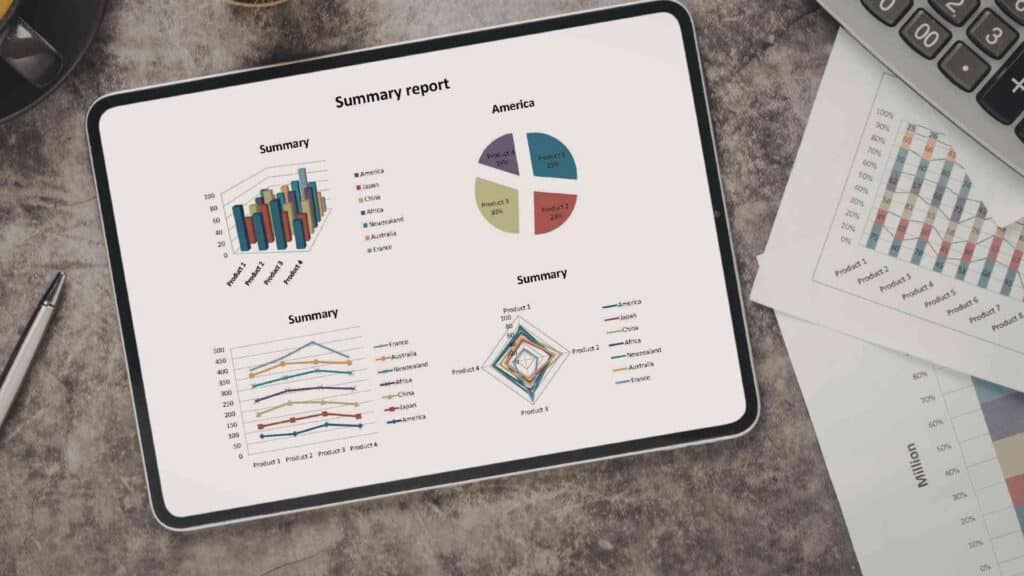
According to Fullcast’s 2026 Benchmarks Report, 78.3% of sellers missed quota in 2025, while revenue per seller dropped 17.3%. That means nearly four out of five reps fell short despite having access to more tools, dashboards, and data than at any point in history. Performance is getting worse, not better.
The problem isn’t a lack of measurement. It’s a lack of meaning behind the measurements.
Most sales organizations track dozens of metrics across multiple platforms without ever connecting those numbers to improved outcomes. Reps hit activity targets but miss quota. Leaders review pipeline reports but still get blindsided at quarter’s end. The data exists, but the insight doesn’t.
Here’s the core takeaway: you don’t need more metrics. You need the right metrics tied to a system that drives action. That means understanding which data points actually predict quota attainment. Building role-specific dashboards that surface what matters. And connecting performance measurement to your broader sales performance management strategy.
This guide will show you exactly how to do that. You’ll learn the difference between vanity metrics and genuine performance drivers. You’ll discover which leading indicators give you time to course-correct before the quarter slips away. And you’ll walk away with a practical framework for building a measurement system that doesn’t just report on revenue outcomes but actively improves them.
What Are Sales Team Performance Metrics?
Sales team performance metrics are measurable numbers that show how effectively your sales organization converts effort into revenue against defined targets. As Zendesk research puts it, these are “measurements that help gauge the effectiveness of agents, systems, and sales strategies.” That definition works as a starting point, but the real value comes from what you do with these metrics.
Performance metrics become powerful when you categorize and act on them deliberately. Every metric your team tracks falls into one of three families:
- Activity metrics measure what reps do: calls made, emails sent, meetings booked, demos delivered. These are the inputs to your revenue engine.
- Outcome metrics measure what results reps achieve: revenue closed, deals won, quota attainment. These are the outputs.
- Efficiency metrics measure how well reps convert activity into outcomes: win rates, sales cycle length, revenue per rep. These reveal the quality of your process.
Most organizations make a critical mistake here. They track everything they can measure instead of measuring what actually matters. A CRM full of 40 dashboards and 200 data fields doesn’t make your team more effective. It makes them more distracted.
The best metrics are leading indicators that allow you to course-correct before quota periods end, not lagging indicators that only tell you what already happened. These metrics connect to a broader RevOps metrics framework that aligns sales, marketing, and customer success around shared revenue goals.
Metrics should reveal specific gaps between your go-to-market (GTM) plan and actual execution, like when pipeline generation falls 20% behind target in week three of the quarter. When they do, they become a tool for continuous improvement rather than a report on what you can no longer change.
Why Sales Team Performance Metrics Matter
The business case for disciplined performance measurement goes beyond reporting. Here’s what the right metrics actually enable:
- Revenue predictability. When you track the metrics that correlate to closed revenue, you can forecast with confidence.
- Resource optimization. Metrics tell you where to invest and where to cut. Which territories are overserved? Which segments are underperforming? Without data, these become guessing games.
- Early warning systems. The right leading indicators flag performance drift weeks before it impacts the quarter. Pipeline coverage drops below 3x? That’s a signal to act now, not at the next quarterly business review (QBR).
- Coaching precision. Data-driven coaching replaces gut-feel conversations. Instead of “make more calls,” a manager can say “your meeting-to-opportunity conversion rate dropped 15% this month, so let’s work on your discovery process.”
- Compensation accuracy. Transparent metrics build trust. When reps can see exactly how their performance maps to their pay, you eliminate disputes and build confidence across the team.
Without the right metrics, you’re making decisions without visibility. Territory decisions, quota assignments, and comp plan changes all depend on accurate, timely performance data. Miss your metrics, and you don’t just miss quota. You waste resources, frustrate reps, and make strategic decisions based on incomplete information.
The Performance Metrics That Actually Predict Quota Attainment
Not all metrics are created equal. These are the metrics with the strongest correlation to quota attainment and forecast accuracy, organized by the three families that matter most.
Activity Metrics: Measuring Effort and Coverage
Sales Velocity
Sales velocity measures how quickly your team generates revenue.
The formula: (Number of Deals × Average Deal Value × Win Rate) ÷ Sales Cycle Length
For example, a rep with 20 deals, a $50,000 average deal value, a 25% win rate, and a 90-day sales cycle has a velocity of $2,778 per day. A rep with the same inputs but a 60-day cycle has a velocity of $4,167 per day. That 50% difference in velocity compounds over quarters.
This metric lets you compare performance fairly across different segments, products, and geographies. It’s the best overall measure of rep effectiveness because it accounts for both volume and efficiency.
Pipeline Coverage Ratio
Pipeline coverage tells you whether you have enough in the funnel to hit your number. Divide total pipeline value by quota.
Industry benchmarks have shifted. Unweighted pipeline should sit between 3-5x, but weighted pipeline coverage (which adjusts each deal’s value by its probability of closing based on deal stage) should target 1.2-1.5x. This is a leading indicator. If coverage drops below threshold mid-quarter, you know quota is at risk before a single deal slips.
Activity Conversion Rates
Raw activity counts are vanity metrics. What matters is the conversion between stages:
- Calls/emails to meetings
- Meetings to opportunities
- Opportunities to closed-won
As Outreach data highlights, time spent on actual selling activities matters more than total activity volume. A rep who books 10 meetings from 50 calls is outperforming one who books 10 from 200. Track the ratios, not just the totals.
Outcome Metrics: Measuring Results
Quota Attainment Rate
The formula: (Actual Revenue ÷ Quota) × 100
Healthy organizations see 80% or more of their team at 80% or higher attainment. If your distribution skews heavily toward the bottom, the problem may be quota design, not rep performance. Understanding how to properly set a sales quota is a prerequisite to measuring attainment accurately.
Win Rate
Track overall win rate and win rate by stage. A 25% overall win rate with a 60% close rate from proposal stage tells a different story than a 25% win rate with a 30% close rate. The former suggests strong qualification. The latter signals a problem in your closing process. Monitoring deal health metrics at each stage predicts and improves win rates over time.
Average Deal Size
Track by segment, product, and rep. Declining deal size may signal excessive discounting, down-market drift, or misaligned territory assignments. This metric directly influences quota setting and territory design.
Sales Cycle Length
Measure time from opportunity creation to close. Lengthening cycles compress your ability to forecast accurately and plan capacity. Consistent or decreasing cycle length is the goal.
Efficiency Metrics: Measuring Productivity
Revenue per Rep
Total revenue divided by number of reps. This should increase over time as processes mature, enablement improves, and territories stabilize. When it declines, something structural has changed.
Customer Acquisition Cost (CAC)
(Sales + Marketing Costs) ÷ New Customers Acquired. This determines whether your growth is sustainable. Target a CAC payback period (the time it takes to recover the cost of acquiring a customer through their revenue) under 12 months.
Time to Productivity
How long does it take a new hire to close their first deal and reach full quota capacity? This metric directly impacts hiring plans and revenue capacity. According to industry research from Gartner, depending on deal complexity, three to six months is the benchmark.
Leading vs. Lagging Indicators: Know the Difference
Lagging indicators tell you what happened. Revenue, quota attainment, and win rate are all backward-looking. They’re essential for accountability but useless for course correction.
Leading indicators predict what will happen. Pipeline coverage, activity conversion rates, and deal health scores give you time to intervene.
The key is to balance both and understand the relationship between them:
| Lagging Indicator | Leading Indicator That Predicts It |
|---|---|
| Quota Attainment | Pipeline Coverage Ratio |
| Win Rate | Deal Health Score |
| Revenue per Rep | Sales Velocity |
| Sales Cycle Length | Stakeholder Engagement (contacts engaged per deal) |
Build dashboards that show these relationships side by side. When a leading indicator drops, you should know exactly which lagging outcome is at risk and what action to take.
How To Choose the Right Metrics for Your Sales Team
Start with Your Go-to-Market Strategy
Your metrics should reflect your go-to-market motion, not a generic best-practices list copied from a blog post. A product-led growth company (where users adopt the product before sales engages) tracks fundamentally different metrics than an enterprise field sales organization. Usage-based revenue models (where customers pay based on consumption) require different leading indicators than traditional annual recurring revenue (ARR) models.
Apply the Three-Question Validation Test
Before adding any metric to your dashboard, run it through three questions:
- Can we take action on this? If the metric moves in the wrong direction, do you know exactly what to change?
- Does this predict an outcome we care about? Does it correlate to quota attainment or revenue growth?
- Can we measure it accurately and consistently? Is the data reliable and available in real time?
If you can’t answer yes to all three, don’t track it. Every metric that fails this test adds noise without adding signal.
Build Role-Specific Metric Sets
Different roles require different metrics. Individual contributors need data points they can directly control. Leaders need aggregate views that reveal trends and enable strategic decisions.
- Sales Development Representative (SDR) and Business Development Representative (BDR) metrics: Meeting conversion rate, pipeline generated, response rates
- Account Executive (AE) metrics: Win rate, deal size, sales cycle length, quota attainment
- Account Manager metrics: Net retention (revenue kept from existing customers), expansion rate (growth from upsells), customer health score (likelihood of renewal based on engagement signals)
- Team/manager metrics: Team quota attainment, forecast accuracy, pipeline coverage
The principle is simple: measure what each role can influence. An SDR can’t control deal size. A CRO shouldn’t be reviewing individual call counts. Match the metric to the role, and you’ll get better engagement and clearer accountability.
Building a Performance Measurement System That Drives Results
Create Role-Based Dashboards
Different roles need different views of the same underlying data. A one-size-fits-all dashboard serves no one well.
- CRO dashboard: Forecast accuracy, team quota attainment, revenue vs. plan
- VP Sales dashboard: Territory performance, rep rankings, pipeline health
- Frontline manager dashboard: Individual rep metrics, coaching priorities, activity trends
- Rep dashboard: Personal attainment, pipeline coverage, activity vs. quota pace
Fullcast Performance enables unlimited custom dashboards tailored by role, without requiring data team support. When every stakeholder sees the metrics that matter to their decisions, adoption increases and action accelerates.
Establish Review Cadences
According to Gallup research, highly engaged business units experience 78% lower absenteeism and 14% higher productivity than disengaged teams. Regular, structured performance reviews are a key driver of that engagement.
- Daily: Pipeline movement and activity levels (for reps and managers)
- Weekly: Deal progression and forecast changes (for managers and leaders)
- Monthly: Quota attainment trending and win rate analysis (for all levels)
- Quarterly: Strategic adjustments, territory rebalancing, and comp plan effectiveness (for leadership)
Match review frequency to your ability to act. Daily reviews should drive daily actions. Quarterly reviews should drive strategic pivots. If you’re reviewing data weekly but only acting quarterly, you’re wasting everyone’s time.
Connect Metrics to Your GTM Plan
This is where most organizations fail. They track metrics in isolation without connecting them back to their original plan assumptions. The Performance-to-Plan Framework works in five steps:
Define Your Plan Assumptions
Set your GTM plan with specific, measurable assumptions: quota per rep, expected win rate, average deal size, and projected sales cycle length. These become your baseline.
Track Actuals Against Assumptions
Monitor real performance against each assumption continuously, not just at quarter’s end. Performance-to-Plan Tracking enables this continuous monitoring and adjustment rather than annual-only planning cycles.
Identify Drift Early
Flag any assumption where actuals deviate from plan by more than 10%. A 12% drop in win rate or a 15% increase in sales cycle length are early warnings that demand attention.
Run Scenario Analysis
Model what happens next. If win rates stay depressed, what happens to annual targets? If cycle length keeps growing, how many deals will slip past year-end?
Adjust Territories, Quotas, or Resources
Use the scenario analysis to make informed adjustments. Rebalance territories. Revise quotas. Reallocate headcount. Act before the drift becomes a crisis.
Automate Data Collection and Calculation
Manual metric tracking is time-consuming, error-prone, and always out of date. It doesn’t scale.
Effective automation requires:
- A single source of truth unifying data from CRM, marketing automation, and finance
- Real-time or near real-time updates
- Automatic calculation of complex metrics like weighted pipeline and sales velocity
- Alert systems that trigger when metrics cross critical thresholds
When reps can self-serve their own performance data, trust increases and manager time shifts from reporting to coaching.
Common Mistakes in Sales Performance Measurement
Tracking Too Many Metrics
When everything is a priority, nothing is a priority. Organizations that track 30 or more metrics per role create overwhelm and metric fatigue. Reps stop paying attention. Managers spend more time building reports than acting on them.
Limit to five to seven core metrics per role, with two to three designated as primary focus areas. Everything else is supporting context, not a KPI.
Focusing Only on Lagging Indicators
Revenue and quota attainment tell you what already happened. They’re essential for accountability, but they give you zero ability to course-correct mid-quarter.
Balance every lagging indicator with a leading indicator that predicts it. If you’re only reviewing results at month’s end, you’ve already lost the ability to influence those results.
Not Connecting Metrics to Compensation
Reps optimize for what they’re paid on, not what you measure. If your comp plan rewards revenue but your dashboards emphasize activity, you’ll get reps who ignore activity targets and chase deals. If your comp plan rewards meetings but your strategy needs larger deals, you’ll get volume without value.
Ensure your comp plan rewards the behaviors your metrics track. Understanding the distinction between quotas and goals is critical here. Quotas drive compensation. Goals may not. Misalignment between the two creates gaming and frustration.
Ignoring the 10x Performance Gap
On The Go-to-Market Podcast, Guy Rubin shared a striking finding with host Dr. Amy Cook:
“The gap, the delta between the top performing sellers and the rest of our sales team has got wider and wider over the last four years. You know, three years ago we were about six X between the top and average performers. We’re now trending at over 10X and so it’s incredible to see. And just 14% of sellers are now responsible for 80% of new logo revenue.”
Treating all reps the same when top performers operate fundamentally differently is a costly mistake. Segment your analysis by performance tier. The behaviors and metrics that drive top-performer success are different from those of average performers. Coach each segment with different playbooks and different priorities.
Measuring Activity Without Quality
One hundred cold calls to the wrong people produce zero pipeline. Reps who hit every activity target but miss quota are a symptom of measuring volume without measuring quality.
Track activity and conversion rates together. The ratio between effort and outcome reveals whether activity is productive or performative.
The Future of Sales Performance Measurement
AI-Powered Predictive Analytics
The shift from “what happened” to “what will happen” is already underway. AI surfaces patterns in deal progression, rep behavior, and pipeline health that help human analysts focus on the right signals faster. Predictive deal scoring, churn risk modeling, and rep performance forecasting are becoming standard practice.
Fullcast was built AI-first from the ground up, not bolted on as an afterthought. This architectural difference means AI-powered insights are embedded in every layer of the platform, from territory design through forecasting and compensation. The result: RevOps teams spend less time pulling data and more time making decisions that move revenue.
Real-Time Performance Coaching
Quarterly performance reviews are too slow. By the time you identify a coaching opportunity, the quarter is already lost. The future is continuous feedback loops powered by AI-suggested coaching priorities based on metric trends.
When a rep’s pipeline coverage drops below threshold or their win rate declines for two consecutive weeks, the system flags it automatically. Managers coach proactively instead of reactively.
Integrated Planning and Performance
The old model: plan annually, measure quarterly, adjust never. The new model: continuous planning with real-time performance feedback. When metrics show drift from plan, you immediately model scenarios and adjust territories, quotas, or resources.
This is the core of Fullcast’s approach. We guarantee forecast accuracy within 10% of your number and improved quota attainment in six months. That guarantee is possible because our platform connects planning, performance measurement, and compensation in a single system. When a leading indicator shifts, the platform surfaces recommended actions that RevOps teams can evaluate and implement within days, not quarters.
Metrics only matter if they change behavior. Organizations that connect measurement to execution in real time will outperform those that treat metrics as a reporting exercise.
From Measurement to Movement
You don’t need more metrics. You need the right metrics connected to a system that drives action.
Consider the paradox: sales organizations have sophisticated CRMs and business intelligence (BI) tools, yet 78.3% of sellers still miss quota. The problem isn’t lack of data. It’s the disconnect between measurement, planning, and execution.
Your Next Steps:
- Audit your current metrics. Apply the three-question validation test to every metric you track today. Cut anything that doesn’t drive action.
- Build role-based dashboards. Give reps, managers, and leaders focused views of the metrics they can actually influence.
- Connect performance to your plan. Track drift between your assumptions and reality. When you spot a 10% or greater variance, model the impact and adjust.
- Align metrics to compensation. Match how you measure with how you pay. Misalignment breeds gaming and frustration.
Fullcast is the only platform that connects planning, performance measurement, and compensation in one unified Revenue Command Center. We don’t just surface metrics. We help you act on them with AI-powered insights, scenario planning, and automated GTM adjustments.
And we guarantee results: improved quota attainment in six months and forecast accuracy within 10% of your number. That guarantee exists because the platform architecture makes continuous adjustment possible, not because we’re making promises we can’t keep.
Start performance benchmarking today to see how your metrics stack up and where the biggest opportunities live.
The RevOps leaders who master this shift won’t just report on revenue. They’ll drive it.
FAQ
1. Why are sales teams struggling despite having more tools and data than ever?
The problem isn’t a lack of measurement. It’s a lack of meaning behind the measurements. According to research from CSO Insights, most sales organizations track numerous metrics without connecting them to improved outcomes, leading to reps hitting activity targets while still missing quota.
2. What are the three main categories of sales metrics?
Sales performance experts typically organize all sales metrics into three families: activity metrics (what reps do), outcome metrics (results achieved), and efficiency metrics (how well activity converts to outcomes). Understanding these categories helps teams focus on the right measurements instead of drowning in dashboards.
3. What’s the difference between leading and lagging indicators in sales?
Leading indicators allow you to course-correct before quota periods end, while lagging indicators only tell you what already happened. For example, pipeline coverage is a leading indicator that predicts future revenue, while closed-won deals represent a lagging indicator showing past performance. The best sales teams prioritize leading indicators because they enable proactive adjustments rather than reactive analysis.
4. How many metrics should a sales team track per role?
Research from sales performance consultancies suggests organizations should limit tracking to five to seven core metrics per role, with two to three designated as primary focus areas. Tracking dozens of metrics creates analysis paralysis and distracts reps from the activities that actually drive results.
5. What is the sales velocity formula and why does it matter?
Sales velocity is calculated as follows:
Sales Velocity = (Number of Deals × Average Deal Value × Win Rate) ÷ Sales Cycle Length
This single metric captures how quickly revenue moves through your pipeline and helps identify which lever to pull for improvement.
6. How often should sales teams review different types of metrics?
Match review frequency to your ability to take action:
- Daily: Pipeline movement and activity levels
- Weekly: Deal progression and forecast changes
- Monthly: Quota attainment trending and win rate analysis
- Quarterly: Strategic adjustments and territory rebalancing
7. Why is pipeline coverage ratio considered a critical leading indicator?
Pipeline coverage shows whether there’s enough in the funnel to hit targets before the quarter ends. Most high-performing sales organizations target a 3x pipeline coverage ratio, meaning three dollars in pipeline for every dollar of quota. This gives sales leaders time to course-correct by adding pipeline or adjusting focus rather than discovering shortfalls after it’s too late.
8. How does data unification improve sales performance management?
Unifying fragmented data sources into a single platform allows both leadership and reps to access and verify their own performance data. This increases trust in the numbers and frees manager time from data reconciliation to actual coaching conversations.
9. What does proactive performance management mean for sales organizations?
Managing performance before it becomes an issue is critical to building a high-performance, cost-effective sales organization. For example, when a manager notices a rep’s pipeline coverage dropping below target mid-quarter, they can immediately work together to identify new opportunities rather than waiting until the quarter ends to address a missed quota. This means using leading indicators and regular reviews to identify and address problems early.