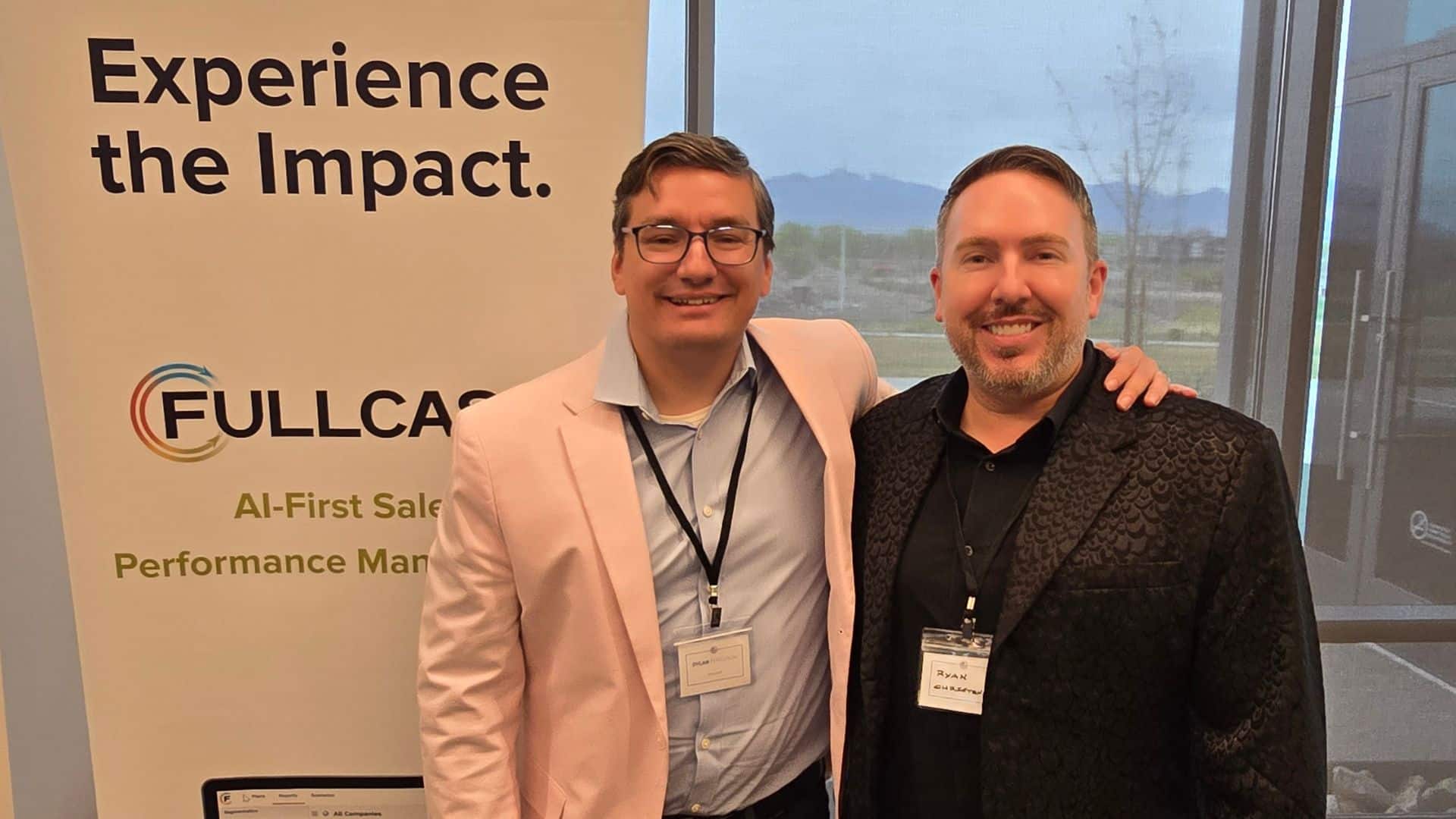









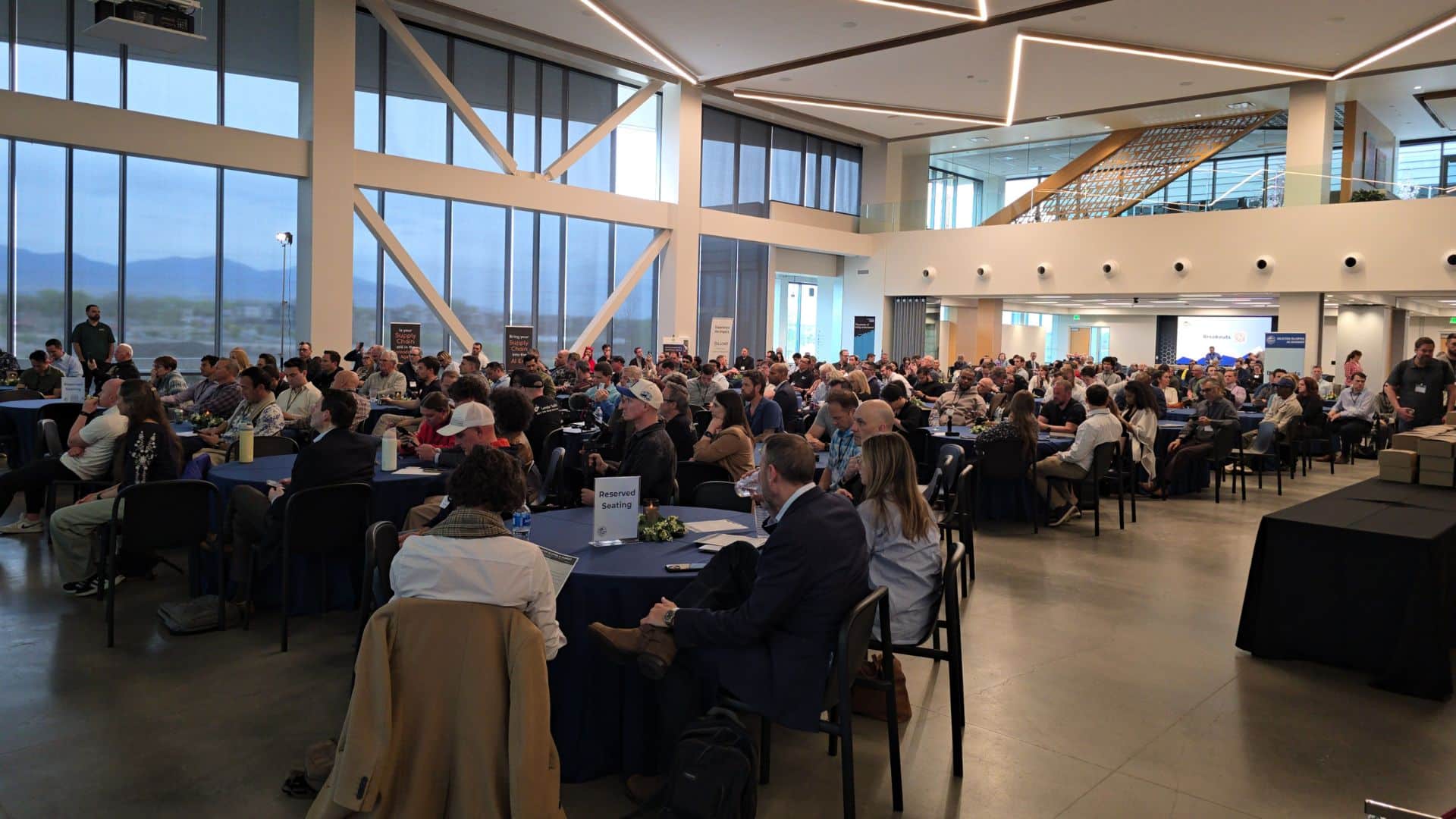
Last week, Fullcast had the privilege of sponsoring the Silicon Slopes AI Chapter AI Summit, where some of the industry’s smartest minds shared their insight on the future of AI.
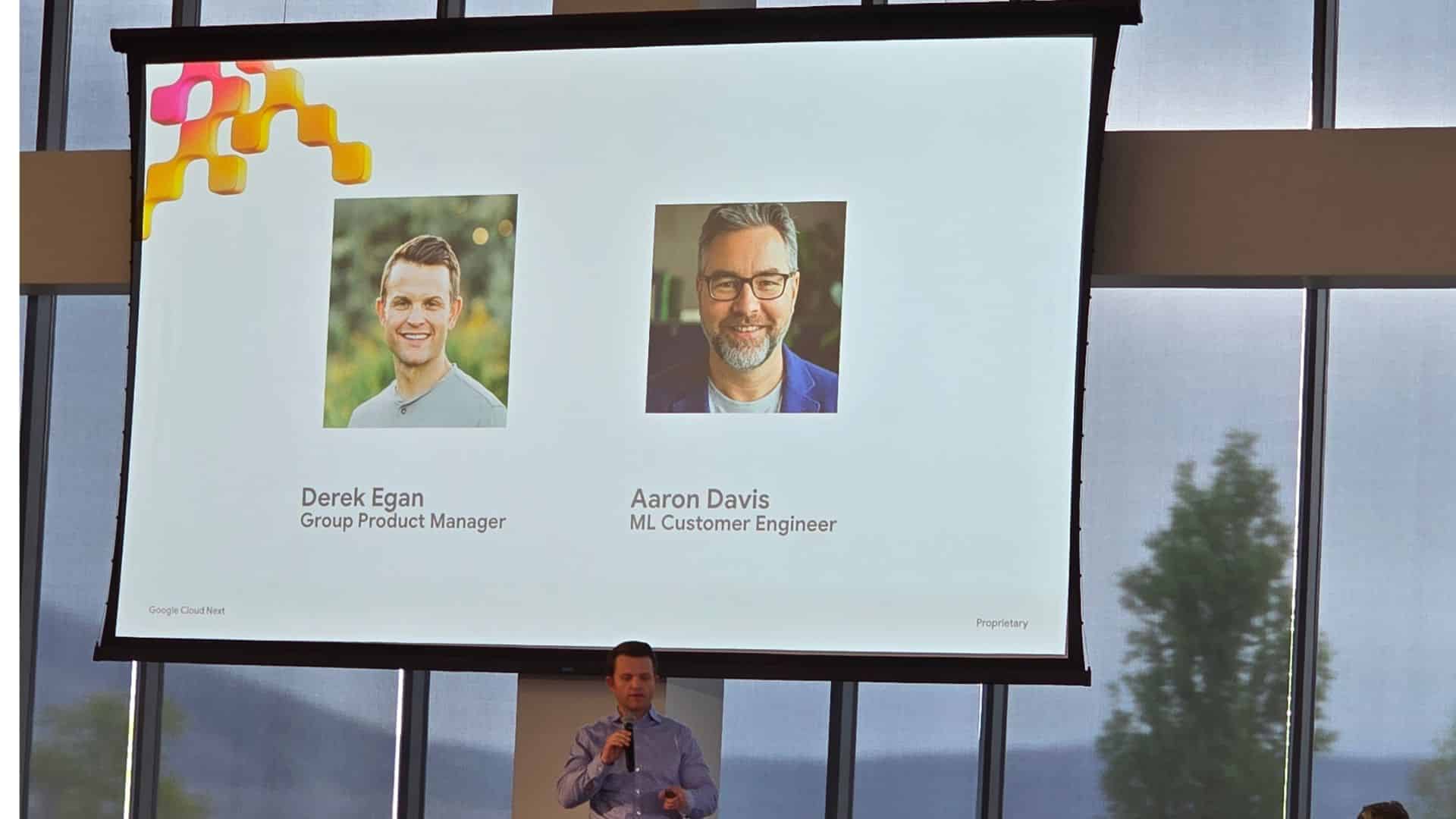
This included Derek Egan and Aaron Davis from Google, who took the stage to discuss building and scaling AI Agents with Google Cloud. Here’s what they said, what it means, and how Fullcast is already putting it into practice for revenue teams.
From Workflows to Intelligent Action
Derek opened with a framing that immediately landed with the room: we are transitioning from deterministic workflows, the kind you’ve carefully programmed and maintained for years, to automation that makes decisions and owns outcomes.
That’s a meaningful distinction. It’s the difference between a process that follows rules and an agent that reasons, plans, and acts on behalf of a user or a business goal.
According to Derek, a true AI agent has five core components:
- A generative model — the intelligence layer that makes decisions and forms plans
- Tools — capabilities that let the agent take real-world action (booking a meeting, routing a lead, updating a CRM record)
- An orchestration layer — the structure that defines an agent’s goals, instructions, and relationships with other agents
- Memory — context that persists across conversations, enabling personalization and continuity
- Infrastructure — the cloud and compute backbone that makes it all run
Google has been building exactly this stack — from TPU infrastructure up through the Gemini model, the Vertex AI agent platform, and out-of-the-box enterprise agents — and Aaron’s live demo showed just how accessible agent-building has become, even for non-developers.
The Evolution: From Chatbot to Autonomous Action
Derek presented the three-stage evolution of AI in the enterprise:
- Chatbots — AI that answers questions but takes no action
- Human-in-the-loop agents — AI that acts, but waits for user approval at key steps
- Autonomous agents — AI running continuously in the background, monitoring systems, processing data, and driving outcomes without waiting to be asked.
Derek drew a parallel to the internet: it fundamentally changed how we transact and interact, but it took time. He predicts that AI agents will ultimately have a greater impact and the timeline is compressing fast.
“It’s never been a better time to be a builder,” he said. “If you’ve got domain expertise, relationships, and proprietary data — and you bring those into an agent platform — you can solve real friction at scale.”
That message struck a chord with the Fullcast team, because it describes exactly what Fullcast has been building.
What This Means for Go-to-Market Teams
The keynote was aimed at developers and technology builders. But the implications for revenue operations, sales leadership, and go-to-market strategy are just as profound and far less discussed.
Think about the friction that lives inside a typical GTM motion:
- Territory plans built in spreadsheets that are outdated before ink dries
- Quota models that don’t reflect real market capacity
- Leads that sit in routing queues while deals cool off
- Reps spending hours on outreach copy instead of conversations
- Forecasts built on gut instinct rather than pipeline signals
Every one of those friction points is exactly the kind of problem an intelligent agent — with the right data, the right tools, and the right orchestration — can eliminate.
How Fullcast Is Already Living in the Agentic Era
While many organizations are still experimenting with what agentic AI could look like, Fullcast is already embedding it into the core of go-to-market operations that transform planning, execution, and performance into a continuous, intelligent system. For instance,
Fullcast Plan eliminates the annual planning nightmare. Using AI-driven territory and quota management, it balances patches mathematically so every rep has a fair shot at 100% and no high-value account falls through the cracks. This is orchestrated intelligence applied to one of the most manual, high-stakes processes in any revenue organization.
Fullcast Copy.ai puts AI-generated, account-specific sales and marketing content directly in reps’ hands, which are tailored to their territory, their personas, and their accounts. Instead of drafting emails from scratch, reps spend time closing. That’s agentic automation in service of sales velocity.
Fullcast Revenue Intelligence moves teams from lagging indicators to leading insights. Real-time pipeline health, rep activity signals, and territory-level visibility let leaders identify stalls before the quarter is at risk. This is exactly the kind of monitoring and continuous intelligence Derek described in the third stage of the agentic evolution.
Fullcast Performance evaluates rep performance with precision, and Fullcast Pay automates commission management, closing the loop between strategy, execution, and incentive.
Taken together, the Fullcast platform is doing what Google’s keynote described as the promise of the agentic era: moving from fragmented, reactive processes to a unified system that reasons, acts, and improves over time.
The GTM playbook that includes territory design, quota setting, pipeline management, sales coaching, commission structure, is deeply human, deeply contextual, and deeply valuable. Pairing it with intelligent agents that can act, remember, and scale is the opportunity of this decade.
If you’re ready to see what that looks like in practice, explore what Fullcast can do for your revenue team.
The Fullcast team is proud to be part of the Silicon Slopes AI community. Interested in learning more about how AI is reshaping go-to-market strategy? Visit fullcast.com.