








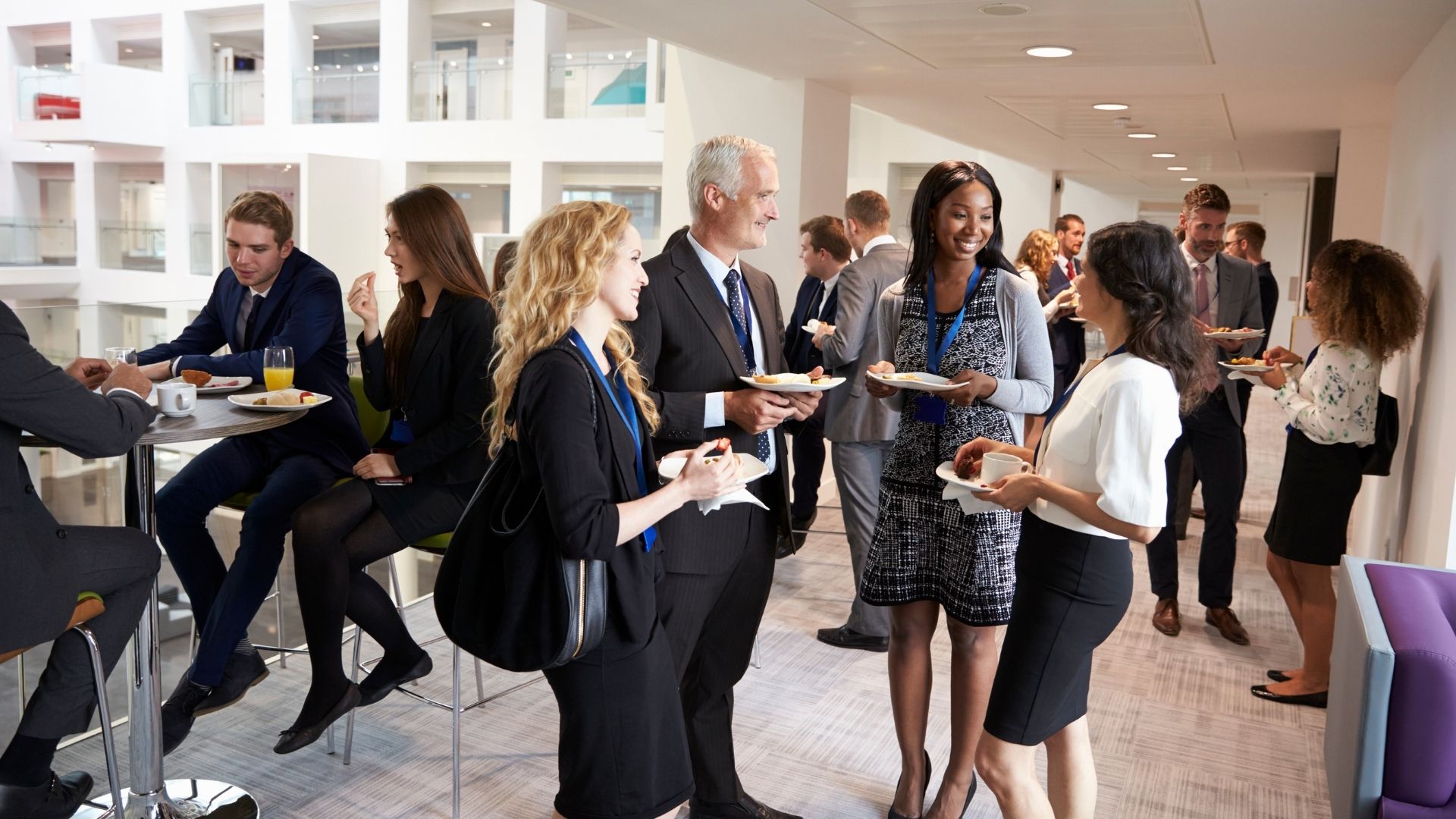
1. Why are traditional B2B events becoming less effective? Successful B2B events prioritize participation over presentations. Professionals are looking for experiences they can actively participate in, not hours of passive listening. Workshops, collaborative activities, and hands-on learning create stronger engagement and more meaningful business relationships than traditional keynote-heavy events.
2. How should companies measure B2B event ROI? Event success should be measured by relationships and revenue—not attendance. Badge scans, booth traffic, and attendance numbers provide limited insight into business impact. High-performing event programs focus on building trusted relationships, influencing buying committees, and contributing to measurable pipeline growth.
3. What makes a B2B event memorable? The best events combine education with memorable experiences. Hands-on workshops, themed experiences, and immersive activities give attendees practical value while creating moments people remember and share. That combination strengthens brand affinity and encourages ongoing engagement after the event ends.
4. How do B2B events generate sales pipeline? Great events become part of your go-to-market strategy. An event doesn’t end when attendees leave the venue. Integrating event data into lead routing, sales follow-up, and account strategy ensures every conversation contributes to long-term revenue goals.
_____________________________________
In today’s oversaturated market, traditional B2B events are failing. They are often expensive, time-consuming, and consistently fall short of delivering measurable ROI. Poorly executed event strategies are notoriously inefficient. According to the 2026 Benchmarks Report, misaligned event efforts yield a stubbornly low 0.8x pipeline efficiency rate, proving the old playbook is broken and that companies desperately need a new strategy.
To stand out and drive predictable revenue, companies must shift from passive observation to active participation. In this episode of the Go-to-Market podcast with Lindsey Ivie, VP of Partnerships at Silicon Slopes, we explored how to modernize professional gatherings. Our conversation delivers a clear message: By embracing an “edutainment” model that blends hands-on education with memorable entertainment, you can design immersive experiences that foster genuine relationships and actively generate sales pipeline.
Why Your Old Event Playbook Is Broken: Moving From Spectator To Participant
The modern professional’s limited attention span and competing priorities mean passive, lecture-style events no longer create meaningful connections. Organizers built the traditional conference model for a different era. Attendees would sit through hours of keynotes, collect business cards at booths, and hope something valuable emerged from the experience. But the modern professional operates under entirely different constraints, and the old approach simply cannot compete for their attention anymore.
The 25-Minute Attention Span: Why Passive Panels Don’t Connect
Lindsey Ivie is refreshingly honest about the limitations of traditional event formats. “I’m ADHD. I don’t like sitting in a room listening to people talk for longer than, I think I check out at 25 minutes, maybe 30 minutes,” she explains. This candid admission highlights a broader truth about today’s professionals who are constantly juggling multiple priorities and struggling to stay engaged during passive presentations.
Traditional panels and keynotes reinforce a fundamental disconnect. Attendees sit as spectators while speakers deliver information at them rather than engaging with them. This format fails to foster the genuine engagement or deep connections necessary for high-value B2B relationships. When your audience mentally checks out after half an hour, you miss critical opportunities for meaningful interaction. Events designed to foster human connection in sales require more than passive listening. They demand active participation.
From Lead Scans To Lasting Relationships: Redefining Event ROI
For too long, marketers have measured event success by vanity metrics: booth scans, badge swipes, and raw attendance numbers. But collecting contacts is not the same as building relationships, and a stack of business cards rarely translates into closed deals.
Teams must measure a modern B2B event strategy in terms of actual revenue impact. The goal is not just to fill a room but to create brand advocates who open doors to buying committees. When you shift your focus from lead quantity to relationship quality, you fundamentally change how you design and execute events. Tools like Fullcast Revenue Intelligence help teams connect those event-driven relationships directly to revenue outcomes, mapping the full decision network across buying committees and ensuring that every interaction contributes to pipeline generation.
The Scrappy Origin Story: How “Topgolf Tuesday” Proved The Model
Some of the best event strategies emerge from necessity rather than abundant resources. Lindsey’s origin story illustrates this perfectly. While working for a company whose product was not yet functional, she found herself in a challenging position with significant pipeline but nothing to sell.
“LinkedIn just launched video on their platform, and I was standing outside a Topgolf with another coworker, and we’re like, ‘Hey, we’re doing Topgolf Tuesday,'” Lindsey recalls. “Total random thing I made up. We totally bootstrapped. We got a bay there, and then we got like two other partners that had bays next to it.”
The first event attracted only two people. But week after week, word spread. “It just became this like everyone was talking about it. And it got to the point where I think we had like 80 people.” The success came not from a massive budget but from early adoption of a new platform and creating a low-pressure environment for genuine networking. This approach exemplifies the difference between demand gen vs lead gen. Rather than simply collecting contacts, Lindsey was building community and generating authentic interest.
The “Edutainment” Framework: Designing Experiences People Want To Attend
The most successful events combine tangible, hands-on learning with a memorable, themed experience that is meticulously planned from the attendee’s perspective. Creating events that compete for professionals’ limited time requires a deliberate methodology. Lindsey has developed a framework through years of experimentation that consistently delivers results.
Principle 1: Lead With Hands-On, Tangible Learning
The most successful events are those where attendees leave with new capabilities they can immediately apply. At StartFest, Lindsey shifted the entire format toward practical workshops. “We totally shifted the way we did it. The last event was like 30 breakouts over two days. The push was to make it very hands-on, tangible.”
“All the AI breakouts we had at StartFest were packed every single one,” Lindsey notes. This success reveals a broader truth about the current professional landscape. “If you think about AI, we’re all having to re-educate ourselves. Every single person to stay ahead of what’s happening.” Professionals will dedicate their precious time to learning essential, career-advancing skills. For teams looking to implement similar educational content, running a high-impact AI pilot can provide a template for delivering genuine value.
Principle 2: Engineer A Memorable, Themed Experience
Education alone is not enough. The most impactful events combine learning with memorable experiences that strengthen bonds far beyond what a standard conference mixer can achieve. Lindsey’s “Jedi AI” retreat in Newport exemplifies this approach.
“We did AI training, and that was really, not only was it impactful, but that changed how I work,” Lindsey explains. But the experience extended beyond the classroom. “We did something off the wall. We did the Star Wars night at Disney.” The thematic elements created a cohesive, immersive experience. From social media posts to costumes, every touchpoint reinforced the theme and deepened connections among participants. This approach aligns directly with the core principles of what is brand marketing, creating memorable associations that strengthen relationships.
Principle 3: Visualize The Entire Attendee Journey
Exceptional events do not happen by accident. They require meticulous planning that considers every moment of the attendee experience. Lindsey’s process involves mentally walking through the entire event from the participant’s perspective.
“Any time I do an event, I analyze the event from the attendee’s perspective. I visualize a lot. In my head I already have the flow, the feel, the whole experience worked out in my head. So I try to walk through the whole experience in my head and make sure I’m ensuring every stage of the experience is thoughtfully planned before I even do an event.”
This approach has evolved with technology. “Now I built an app. I created an app for all the events I do, and I customize it for each one. I have the floor plan, I’ll drop it in, and then that helps with dropping in the sponsor tables and visualizing the experience.” This level of orchestration mirrors how companies like Degreed orchestrate their entire RevOps engine with similar precision.
Activating Your Event Strategy: From Innovative Ideas To GTM Integration
An innovative event concept only drives revenue when it is fully integrated with your go-to-market plan and supported by seamless operational handoffs. Creating a memorable event is just the beginning. The real value emerges when event outcomes connect directly to your go-to-market plan.
Use New Technology To Bring Your Vision To Life
AI and modern tools are valuable assets for event planners, particularly for visual thinkers and lean teams. Lindsey’s custom app development demonstrates what is now possible. “Now that everything that’s been in my head, I can create,” she explains.
I echo this sentiment, having built my own website two weekends ago using Claude. I was stunned by what is possible. This accessibility represents the next step in the digital marketing, empowering smaller teams to execute sophisticated, personalized event experiences that previously required significant resources.
Ensure Seamless Handoffs From Event To Sales
An amazing event loses its value if your team fails to capture and route the leads and relationships generated. Every interaction must be tracked and assigned to the right representative for timely follow-up. Without this operational foundation, even the most successful events fail to generate measurable pipeline. Implementing proper lead routing ensures that event contacts are assigned correctly and aligned with your GTM plan, connecting the event directly to your sales motion.
Align Every Event With Your Integrated GTM Plan
Events cannot operate as siloed activities. They must function as core components of a larger go-to-market strategy, designed to support specific revenue goals, target accounts, and sales plays. A successful B2B event strategy is one that is fully integrated with the entire revenue team. This alignment is essential for building integrated marketing campaigns that drive predictable revenue rather than isolated spikes of activity.
From Attendee To Advocate: A New Playbook For B2B Events
The future of B2B event strategy lies in creating valuable, participant-centric experiences that blend education with entertainment. Lindsey Ivie’s proven principles provide a clear roadmap: prioritize hands-on learning that delivers immediate value, engineer memorable themed experiences that strengthen relationships, and visualize the entire attendee journey with meticulous attention to detail.
As Justin Rishidi noted on The Go-to-Market Podcast, “Everything that we do from an online lead generation standpoint, we try to funnel into in-person behaviors.” In a digital-first world, these in-person interactions are more critical than ever for building trust.
The old playbook of passive panels and badge scans is failing. Marketing and RevOps leaders who embrace this new approach will build not just events but communities and pipelines that drive sustainable growth. Start small if you must. Bootstrap a Topgolf Tuesday. Design one hands-on workshop. Create one themed experience. The key is shifting your mindset from collecting contacts to creating advocates who will open doors long after the event ends.